✦ Archival Story
FolkloreA New Look
After a decade of WordPress it's time to move on.
#blog#astro#cms#meta
Firsthand oral histories from early computer animation at Pixar and Ohio State CGRG, mixed with research dispatches on perception, haptics, software experiments, and music.
After a decade of WordPress it's time to move on.
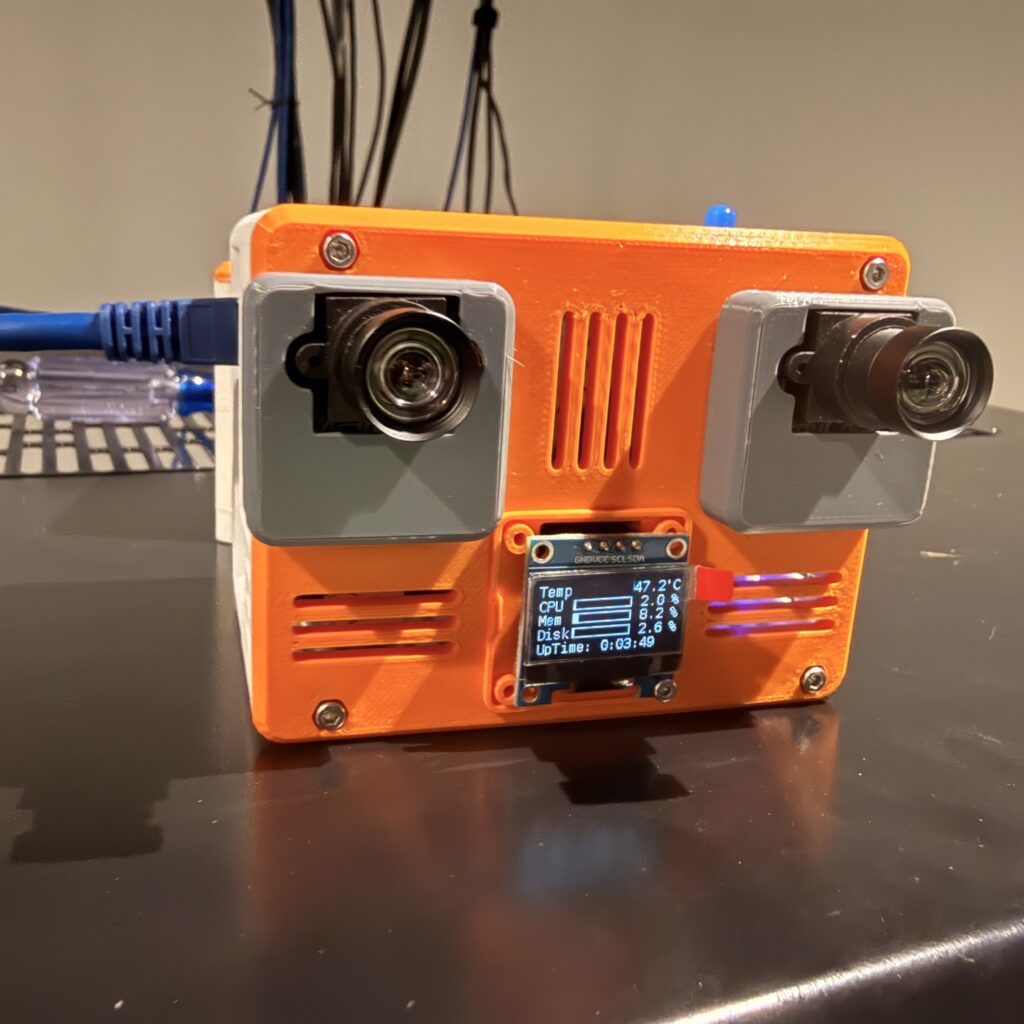
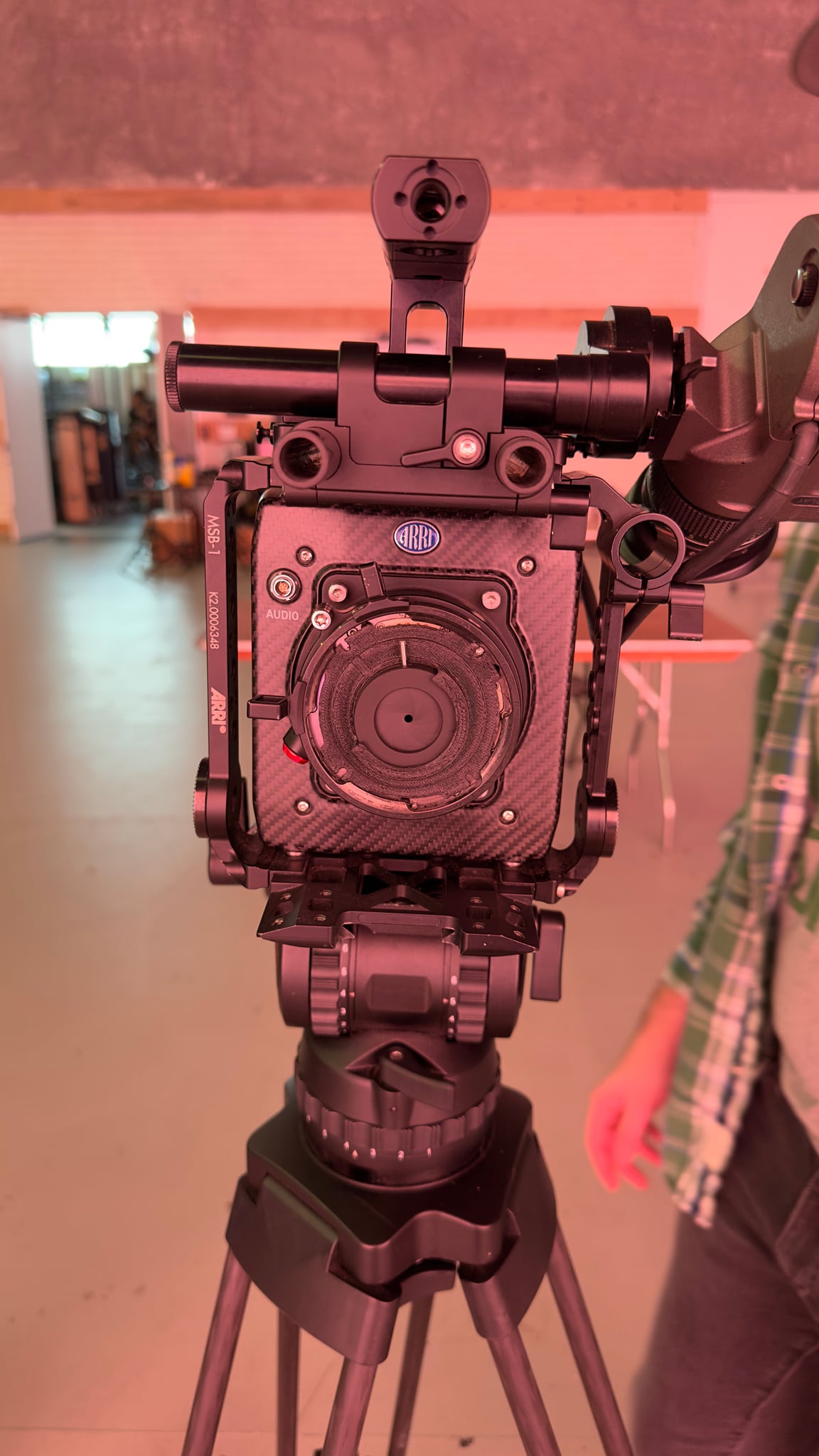
I can’t believe I didn’t update this. A year or so ago, Aidan Montag embarked on a quest to design some affordable and flexible devices for motion capture, camera tracking, and, on a stretch, volume capture. We named…
Cringe! Apple being Apple and Apple Music being Apple Music, I recently ‘lost’ some digitized tapes from gigs I did. My total faith in the cloud (Apple Music Cloud to be specific) meant that I had to go…
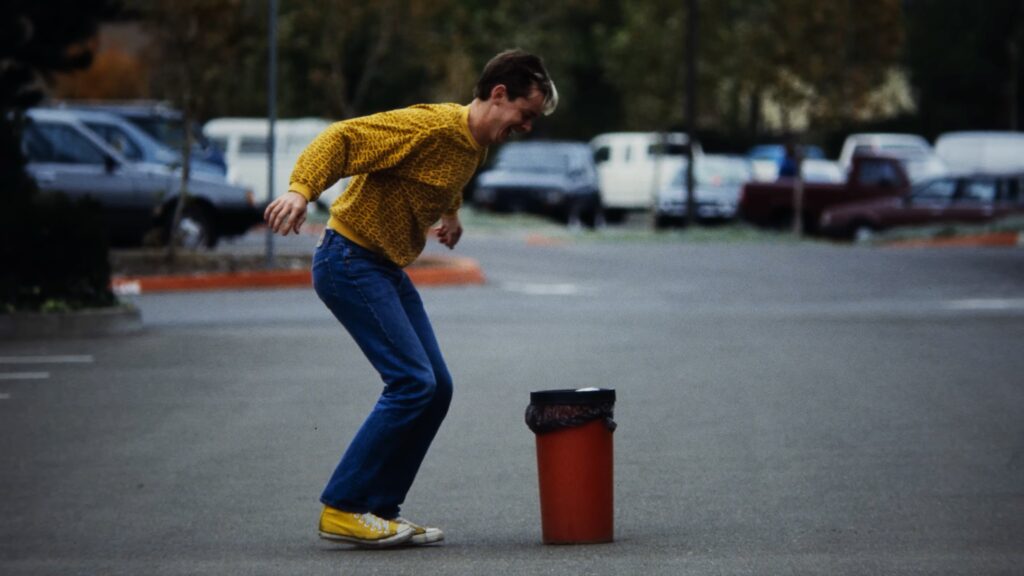
In which I jump over a trash can. We did a lot of reference footage, back in the day. Here, specifically, in the mid 1980s, we wanted some reference for Luxo, Jr. So, out to the parking lot…
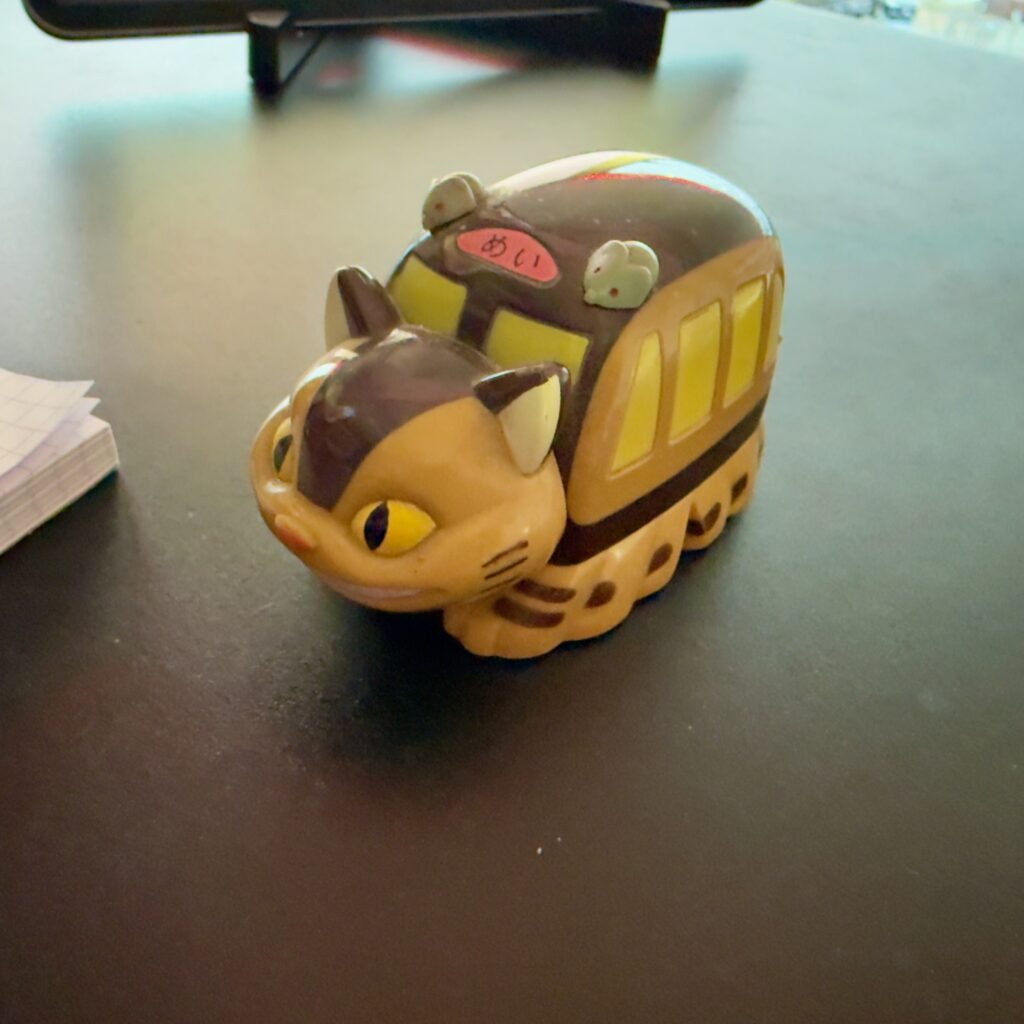
Back in the late 80s, Hayao Miyazaki came to visit Pixar. He brought gifts. He had something for everyone, he gave the animation group a Seiko Talking Pyramid Clock. Craig Good and I spent the afternoon trying to…
I grew up just down river from Ann Magnuson, one half of Bongwater. They informed the world of David’s needs in this wonderful song. In between leaving Pixar and starting back to grad school, I connected with then-former…
Some photos of the Pi Based, Arducam driven camera system.
I owe Bausch & Lomb an explanation. In high school, I convinced my Chemistry teacher that my time for that class was better spent at the local community college (Go Flood Wall Tech … Steamers?) learning Calculus, since…
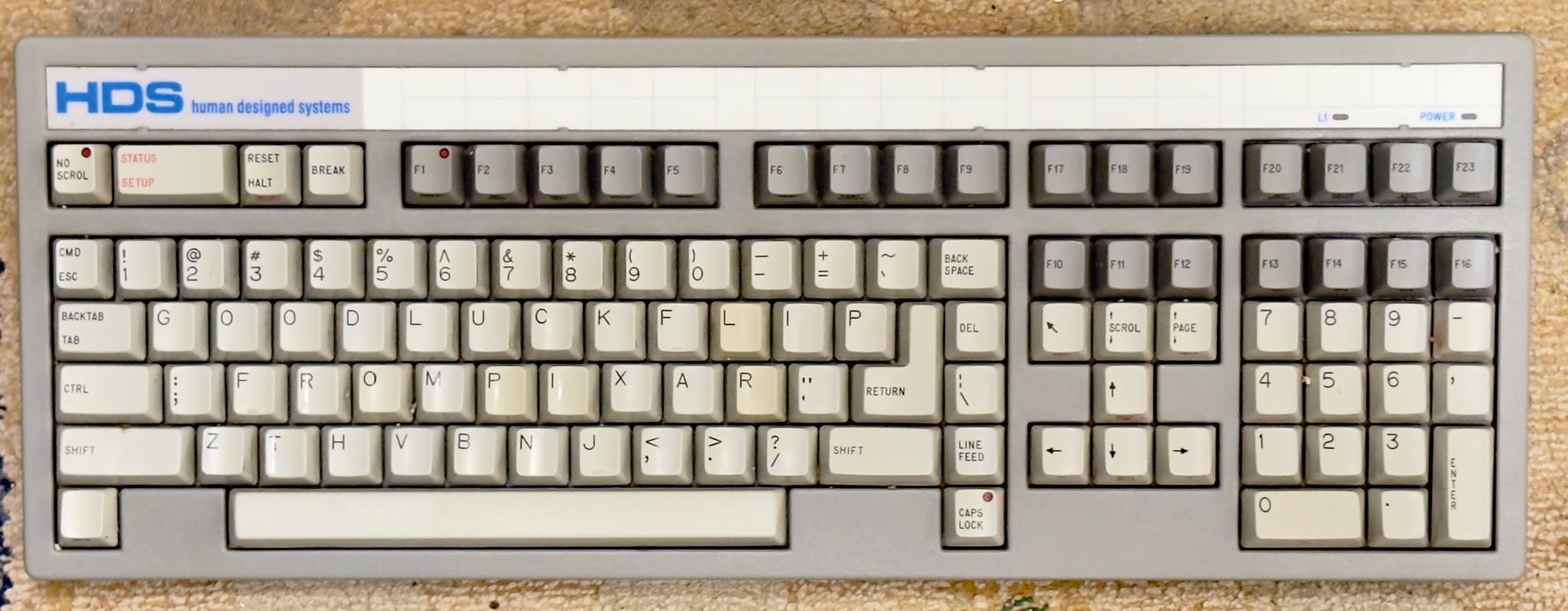
An example of the clash between Caps Lock and 40+ years of emacs motor control. When I ‘retired’ from Pixar in 1992 to go back to grad school, my friends got me a (digital) gold watch. Neftali “El…
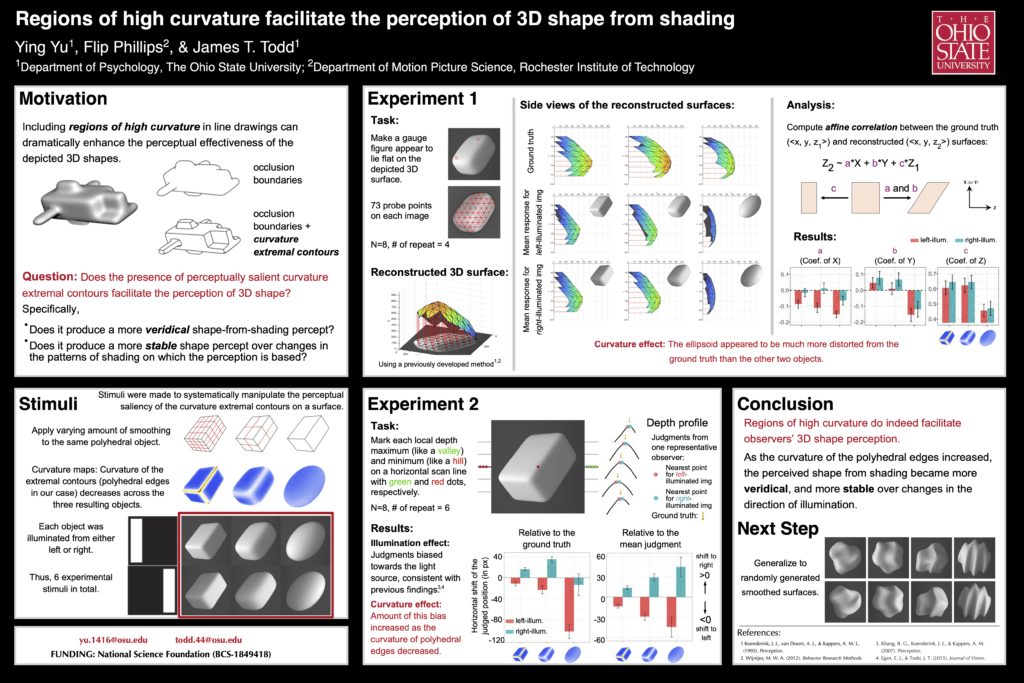
The geometry of the physical object does not represent the visual experience. Three-dimensional (3D) shape perception is one of the most important functions of vision. It is crucial for many tasks, from object recognition to tool use, and…
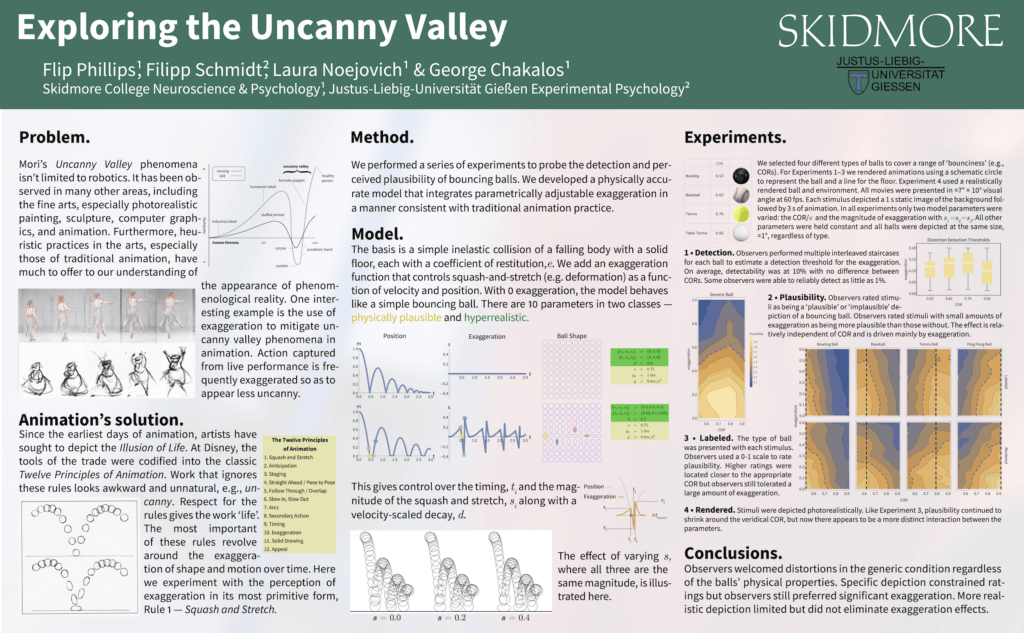
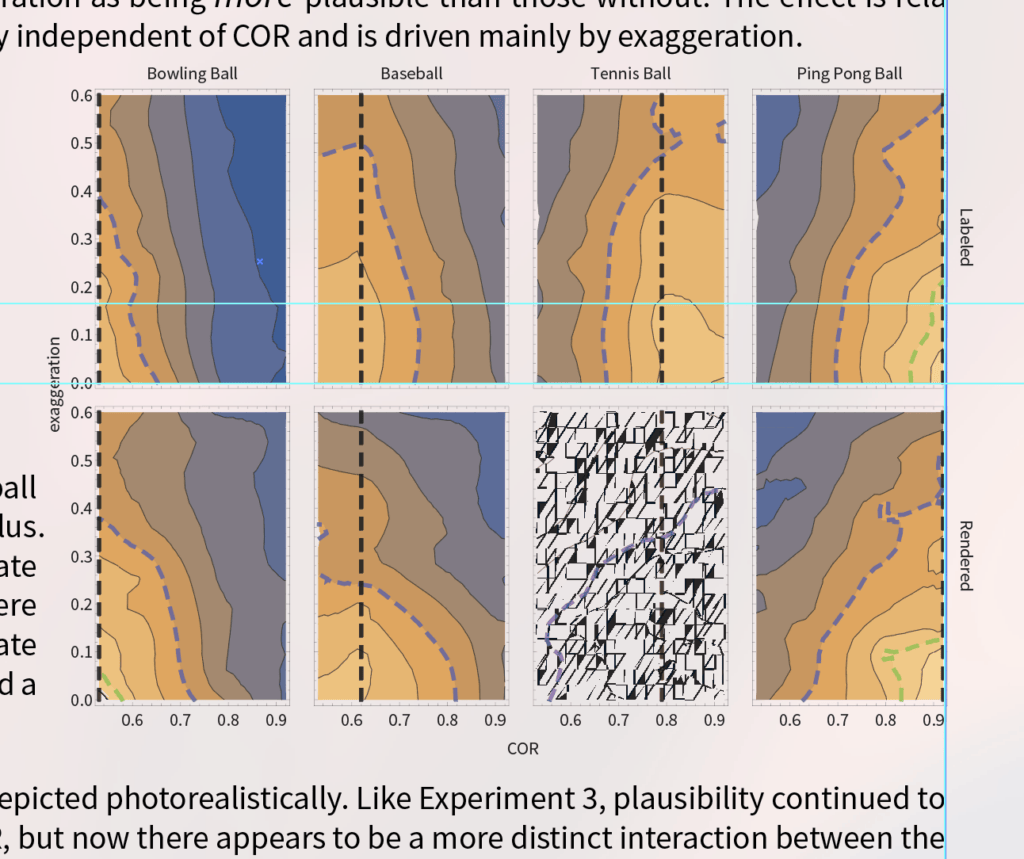
Squashing and stretching our way across the uncanny valley. Abstract The informal heuristic practices of the fine arts have much to offer to our understanding of the appearance of phenomenological reality. One interesting example is the use of exaggeration to…
In my computer graphics youth, everyone wrote two programs – a 2D paint program and a 3D renderer. Such was the curriculum of the time. Ed Tripp taught CIS 781-2-3, a three quarter sequence that took you from…
Found my Grandfather’s draft card in a bunch of my Dad’s stuff. About a year before my Grandfather passed away, I visited him and he pulled his draft card out of his wallet. He handed it to me…
I’m cleaning up a bunch of archived files. While I was in grad school, after Pixar, I did a little bit of consulting to make ends meet. One of the more fun things that I did was write…
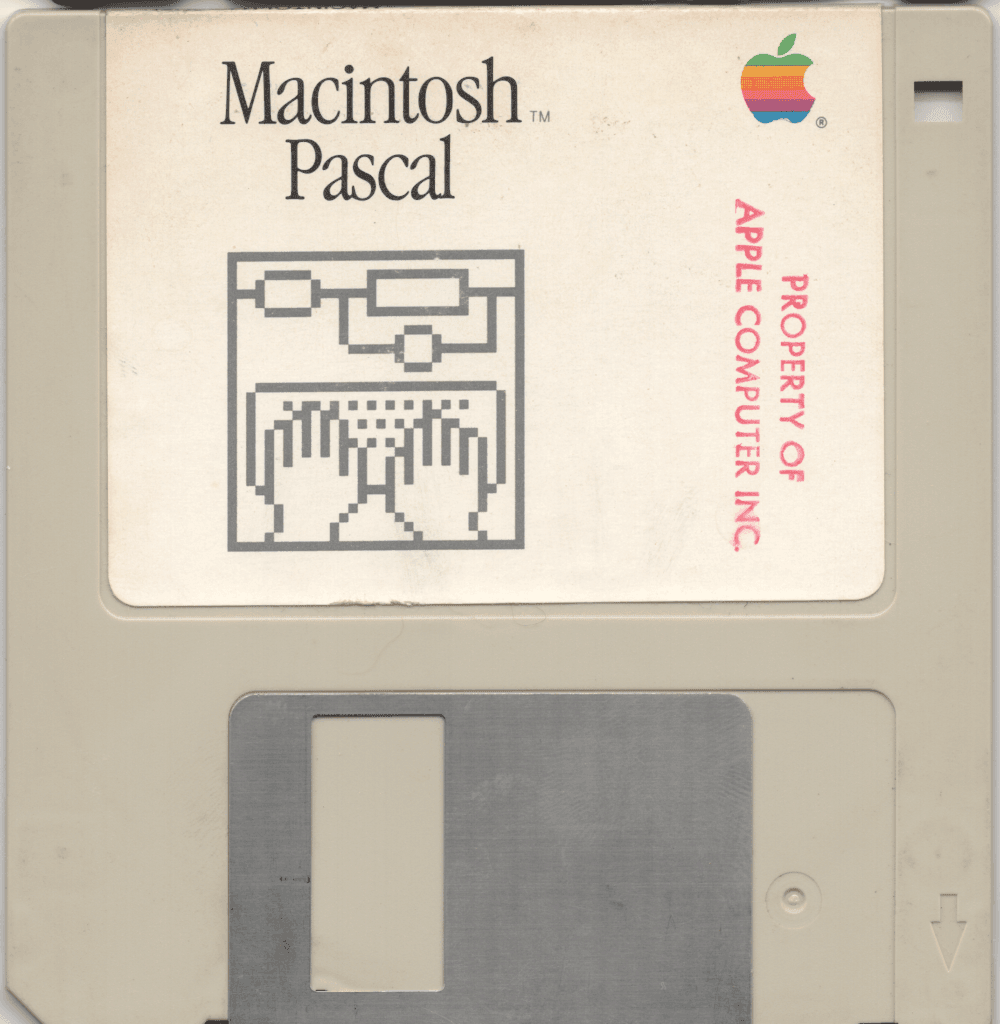
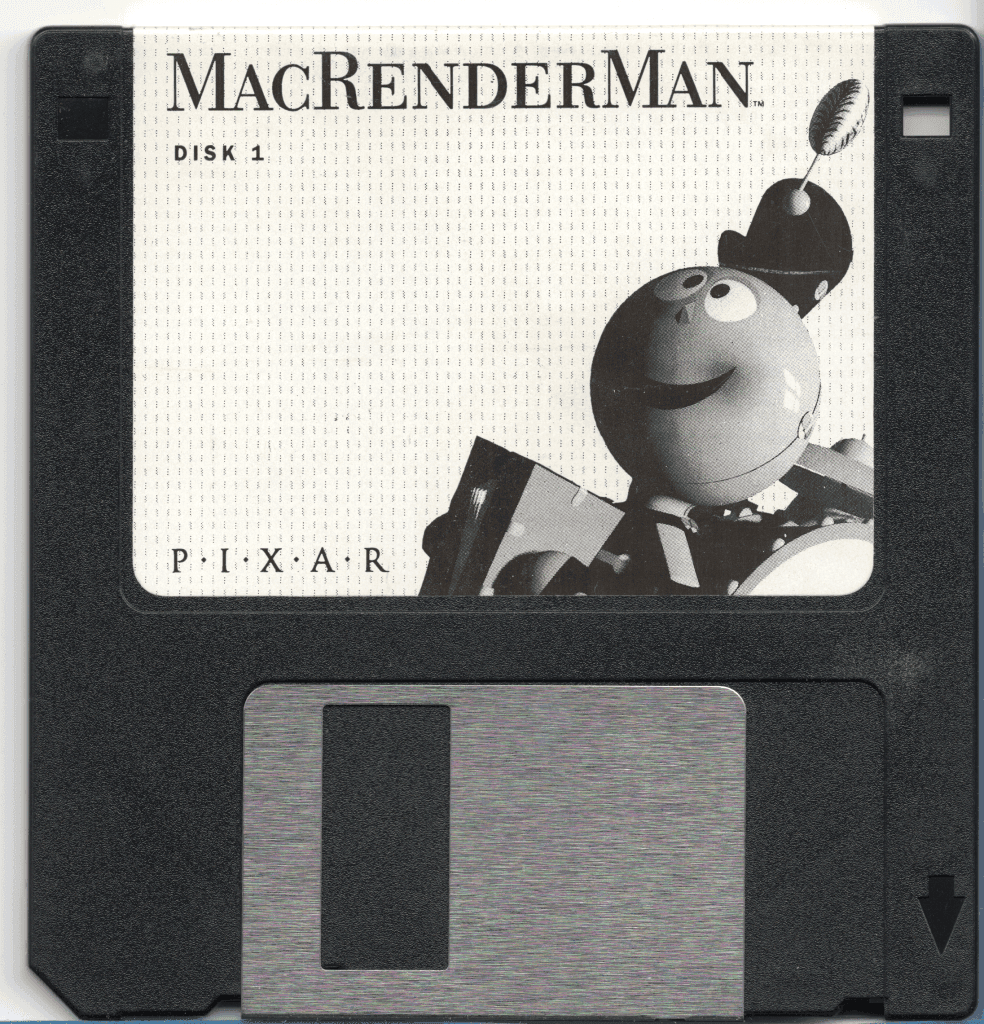
Some historical floppy disk fun from old Pixar days. When Pixar decided to sell RenderMan to the public we had to come up with a good name (It was REYES, Renders Everything You’ve Ever Saw / Seen). You…
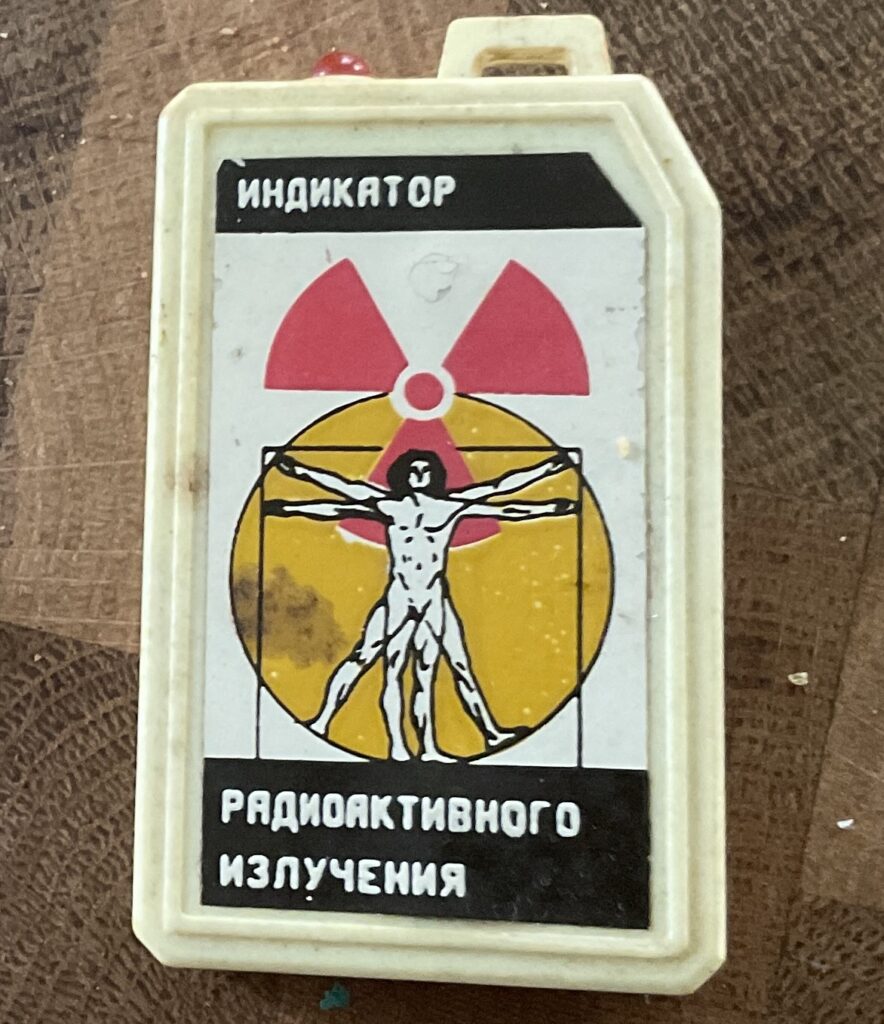
Issued to residents of Chernobyl and surrounding areas after the Chernobyl Disaster. Last I played with it, it still worked. It takes some pretty weird batteries and I think a coil has cracked inside, so I need to…
Some history of style. Once upon a time, Ed Tufte called me a “sanctimonious assohole”. I suggested that he up the dosage of his medications and stopped recommending his books to my students and colleagues. But — The…
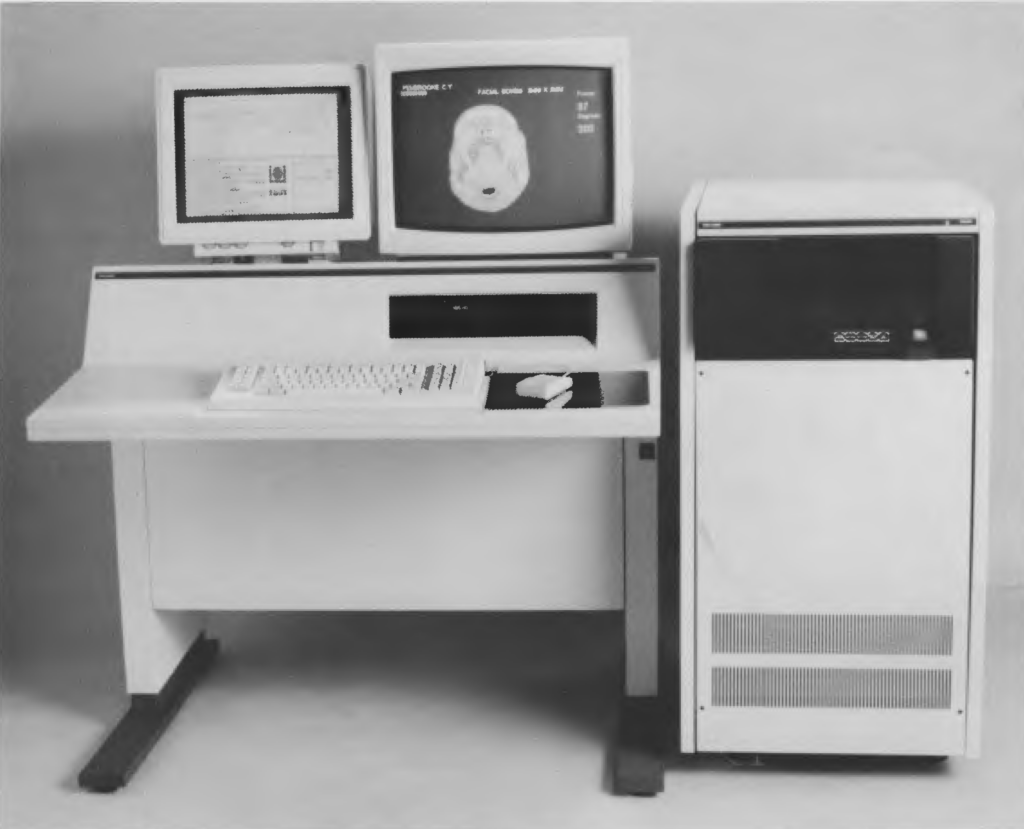
A medical imaging workstation – the beginning of volume imaging When I got my interview at Pixar, I was at Ohio State working on volumetric rendering of CT and MR images. There are a few callbacks to that…
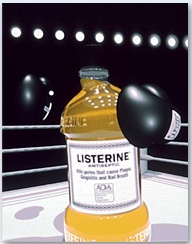
How to drink a few bottles of Listerine, scare your clients, and ultimately see your clients repeat your prank. I told this story to Penn years ago and he decided it was worthy of a place in their…
I just finished a row. It’s about 99% humidity this morning, which, to credit Chris Wedge, reminds me of having just rowed inside someone’s mouth. Chris and I used to ride our bikes together when we were at…
Sometime in the late 80’s, I was a guest at a Spike n’ Mike animation festival, Santa Cruz I think. A bunch of us from Pixar went down, JL was probably the only ‘true’ special guest, but somehow…
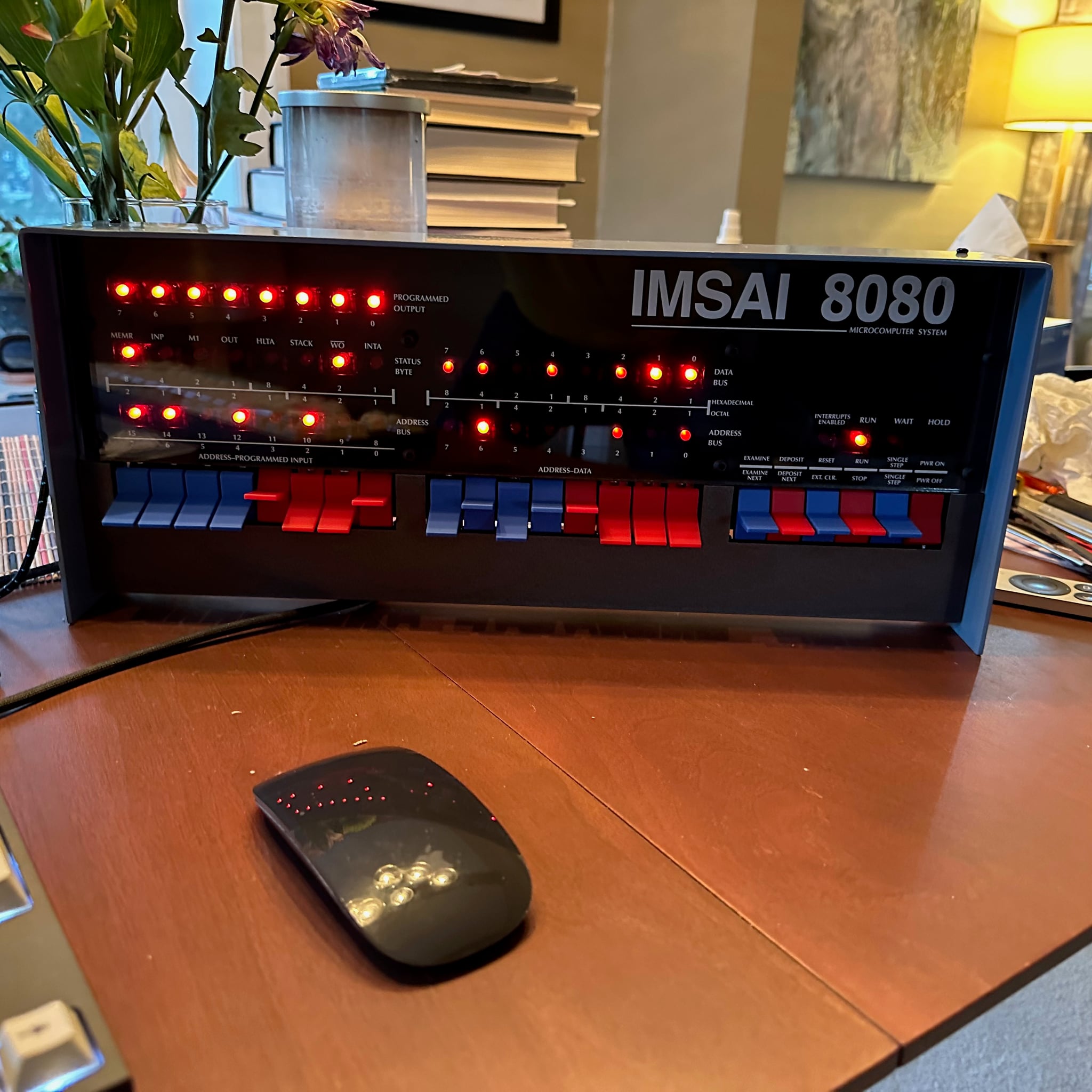
Back and forth in time… The IMSAI 8080 was the first “clone” microcomputer, introduced in 1975 – a lower cost version of the MITS Altair 8800, introduced a year earlier in 1974. I first saw the Altair on…
Freshman Imaging Project ‘sports ball tracking’ project demo for RIT Undergraduate Research presentation. And the poster
Research is just an excuse to have fun and make some crazy art. — Chuck, early 1980s I showed up in Columbus in 1982, a first-generation college student, intent on getting something out of the opportunity to get…
I don’t think IMDB has a category for this role. I’ll drop this here briefly, but this is a slide from Pete Docter‘s Student Academy Award winning short film, Next Door. I will put together a whole post…
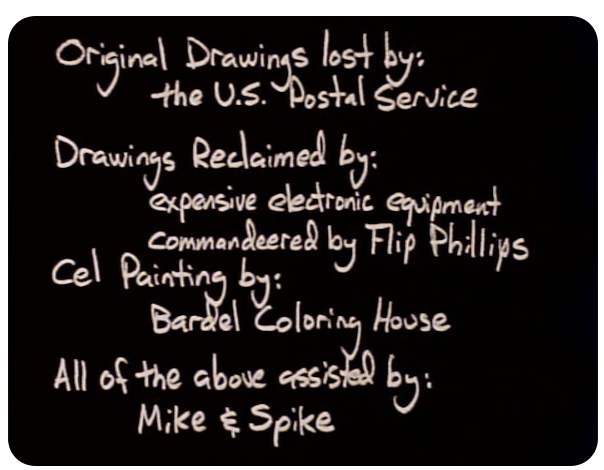
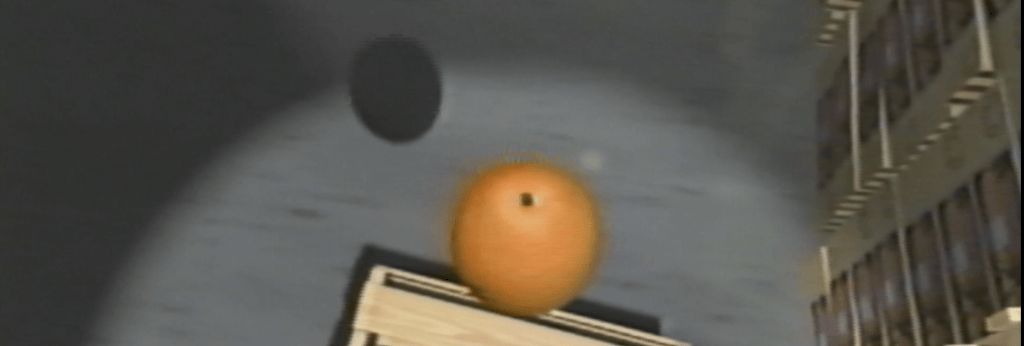
We did a whole bunch of commercial for Tropicana. This was our second — This was the second in a series we did for Tropicana. The first one we did was much simpler, a logo and orange in…
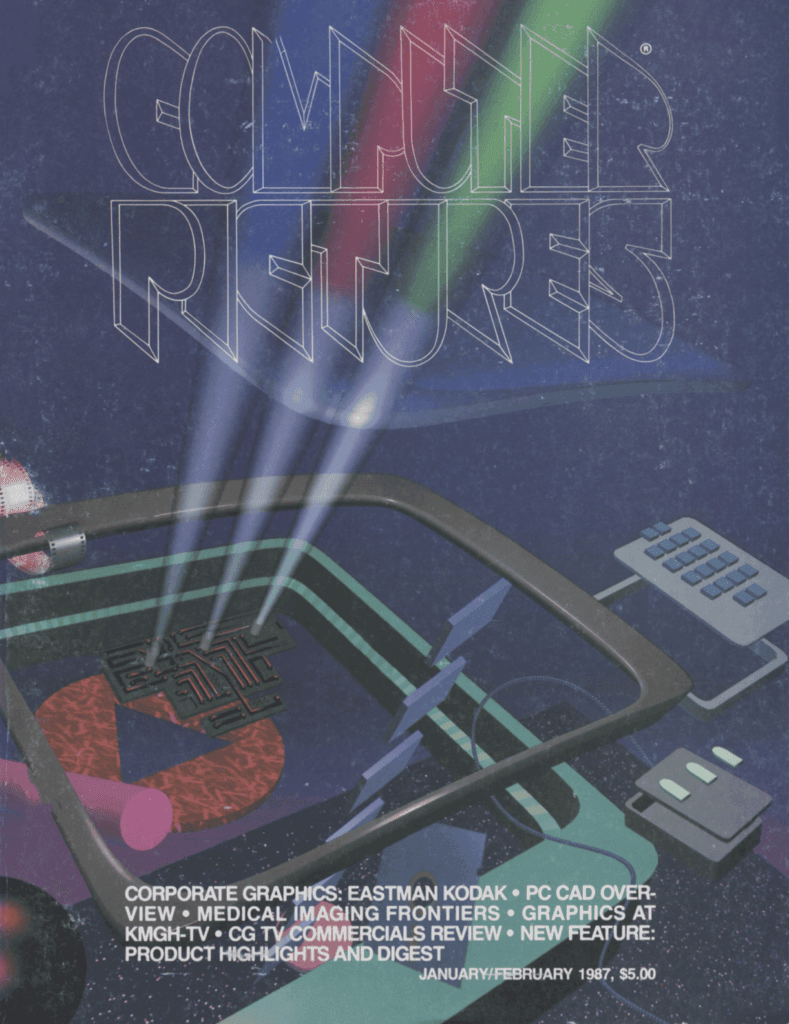
An article from Computer Graphics World, circa June 1986. $125K for the entry level, in mid-1980’s dollars. You still needed a host (Sun-2 at the time was a good choice) and, if I recall, a display device. There’s…
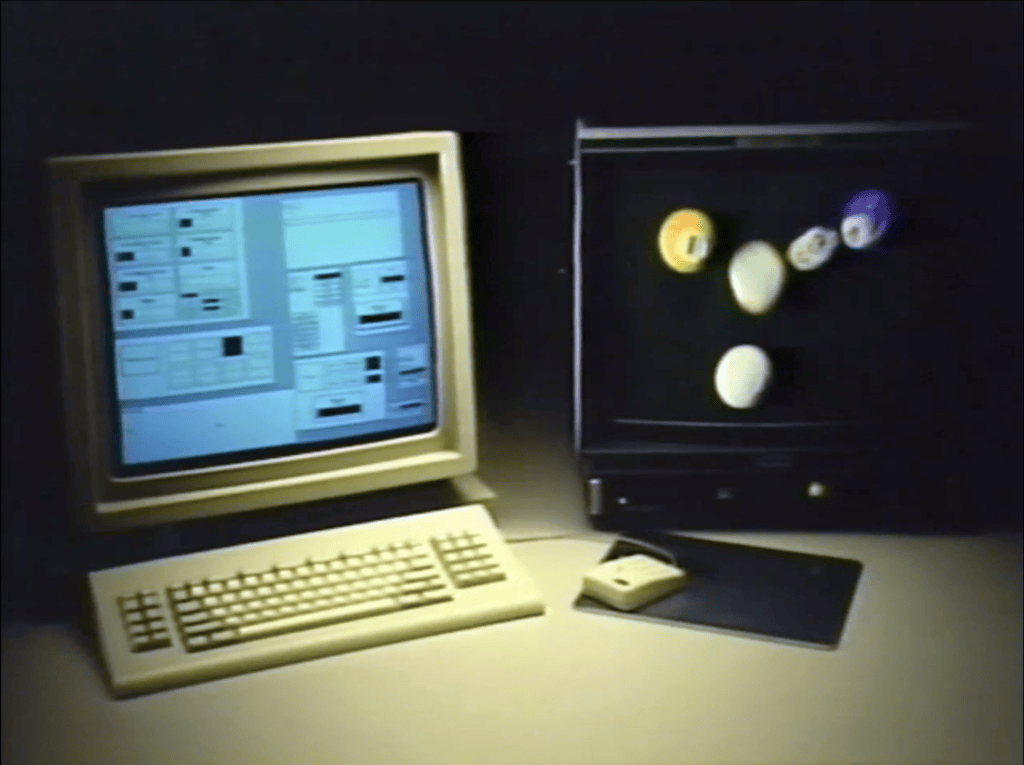
This is what I had on my desk when I arrived at Pixar. A Sun-2 (the CPU cabinet is ‘desk side’) and a Barco monitor. 640 x 480. That optical mouse was great, so much better than the…
The XBR was Sony’s top-of-the-line consumer CRT TV, back in the good old days. So elite, you got to join a club. I believe it stood for “eXtra BRight”. Steve May used to mock it, calling it the…
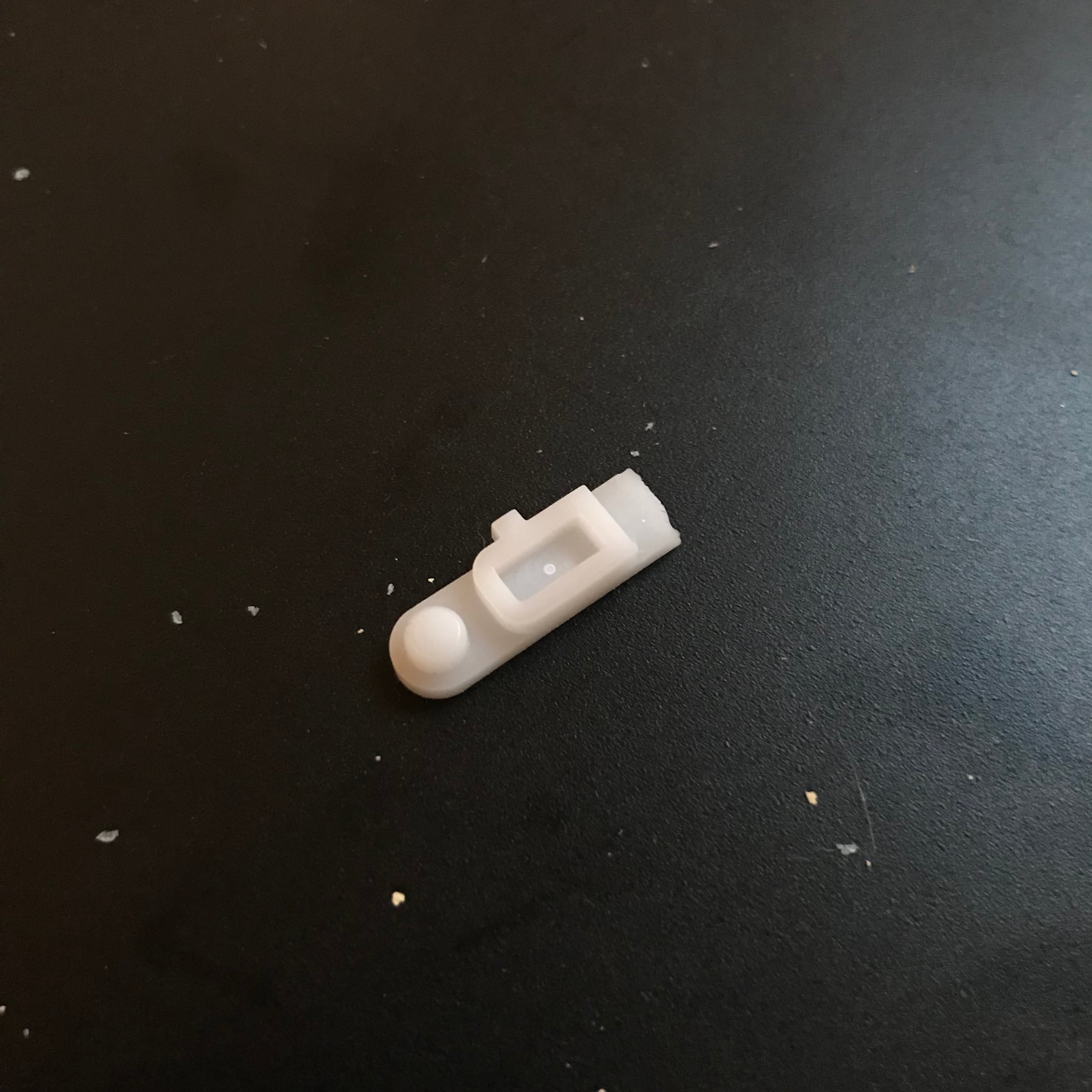
Well, not quite. Back when I started doing 3D printing (around 2002 or so, very expensive, very cool) one piece of sales hype was – Soon, when your dishwasher breaks, you’ll just buy the STL for the part…
Back in the 1980s I wrote a bunch of software as part of the volumetric medical imaging system we designed for Philips (nee Picker) Medical. We used to document our code in those days. I was digging through some archival stuff of mine, looking for an implementation of Bresenham’s line algorithm I wrote for Mathematica, and this document popped up.
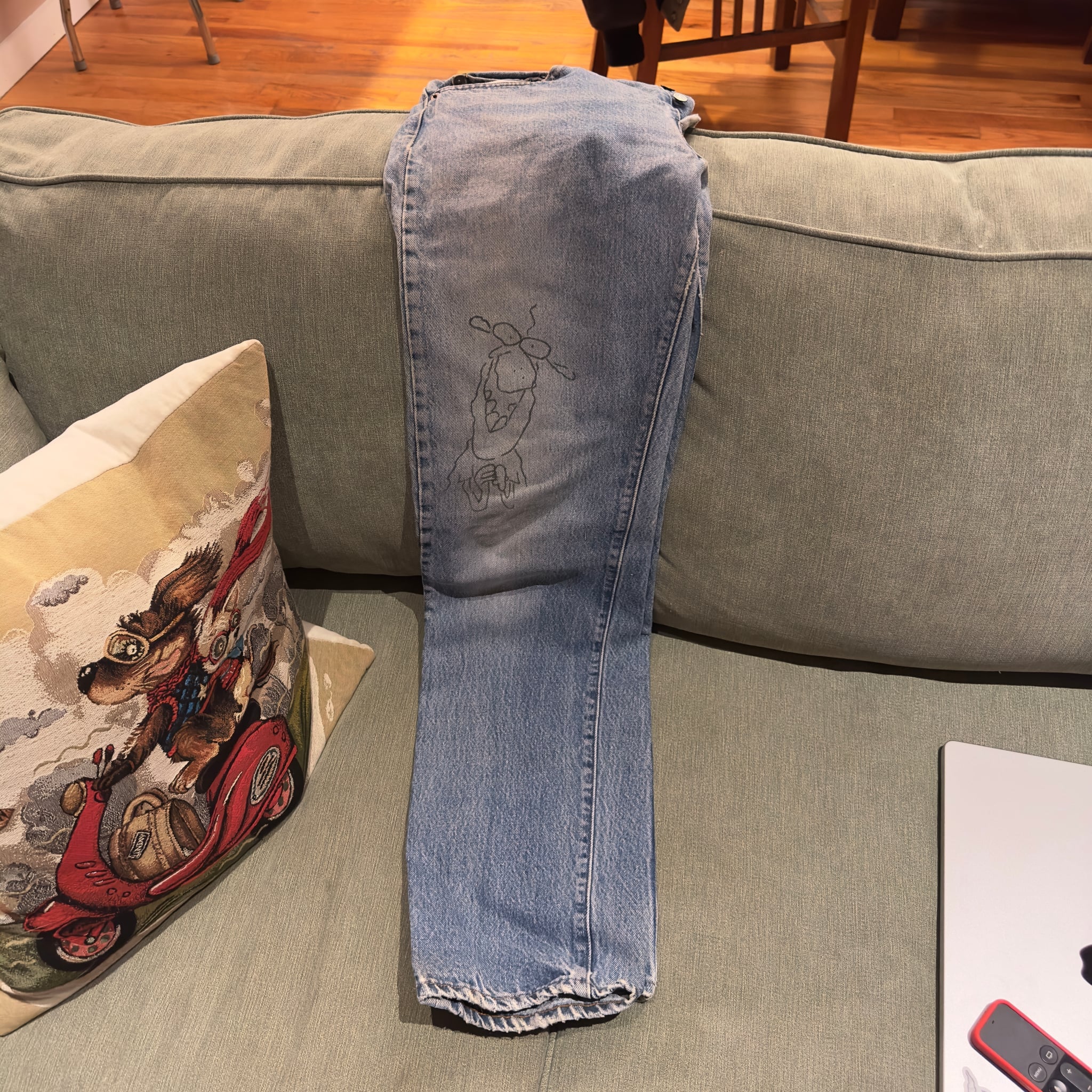
I have a condition that prevents me from wearing pants. I also have a note from my doctor. Notarized. I hesitate to describe it, alas, my condition is this — Being a middle aged dad, I have no…
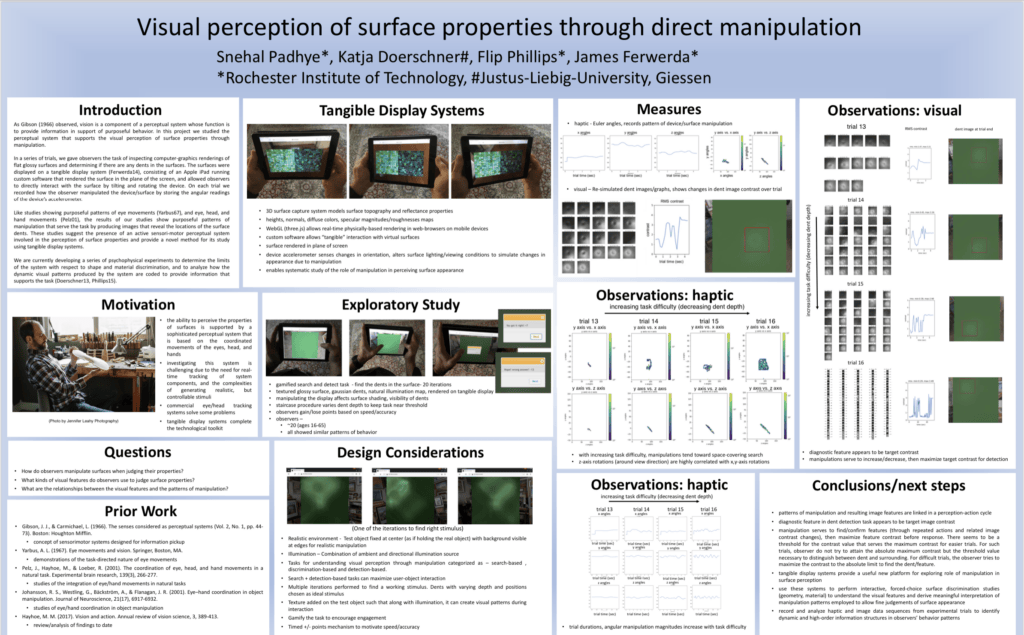
VSS21 – tangible materials. Some work we started at RIT / Gießen right before the universe shut down for a virus break. Snehal was quite the trooper, carrying it on while the rest of us were huddled in…
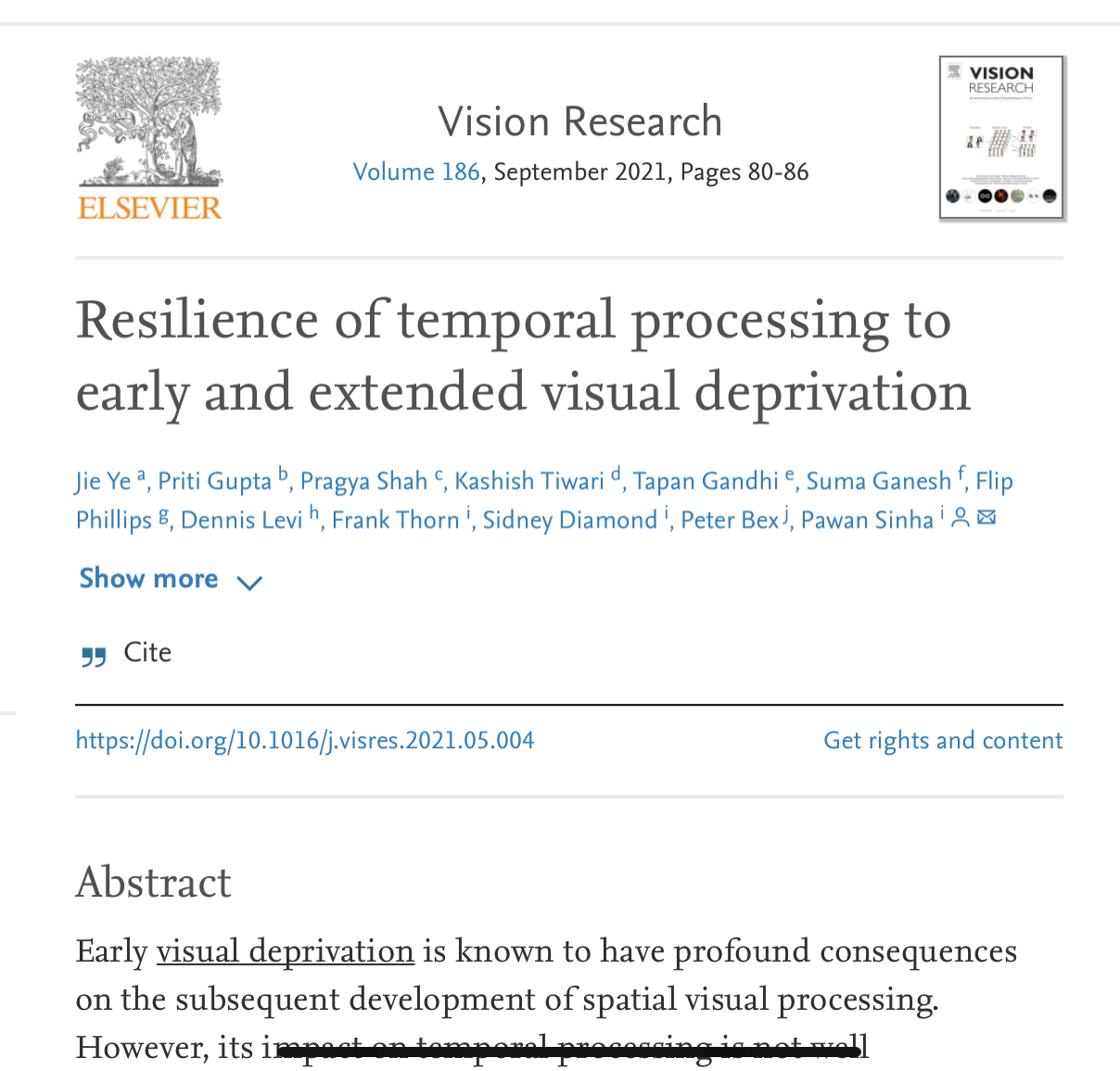
Dynamic vision is preserved in the face of early visual deprivation. Static acuity – not so much. This is a project Pawan and a whole bunch of us started a few years ago, pre plague. This is quite…
Yu, Phillips & Todd 2021, Regions of High Curvature Facilitate the Perception of 3D Shape from Shading, VSS. After the past year of chaos I’m happy to have literally anything to show. Turns out I have more than…
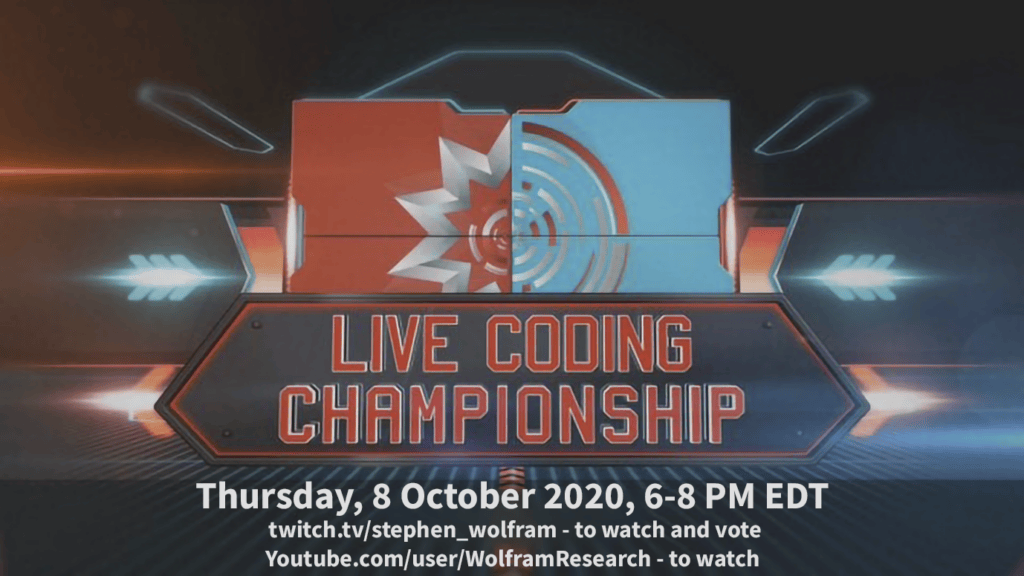
This Thursday, 8 October, at 6 PM EDT, the Wolfram Technology Conference Live Coding Challenge. As in years past, I will be your genial co-host, along with Philip Maymin – It’s a total blast to watch people competitively…
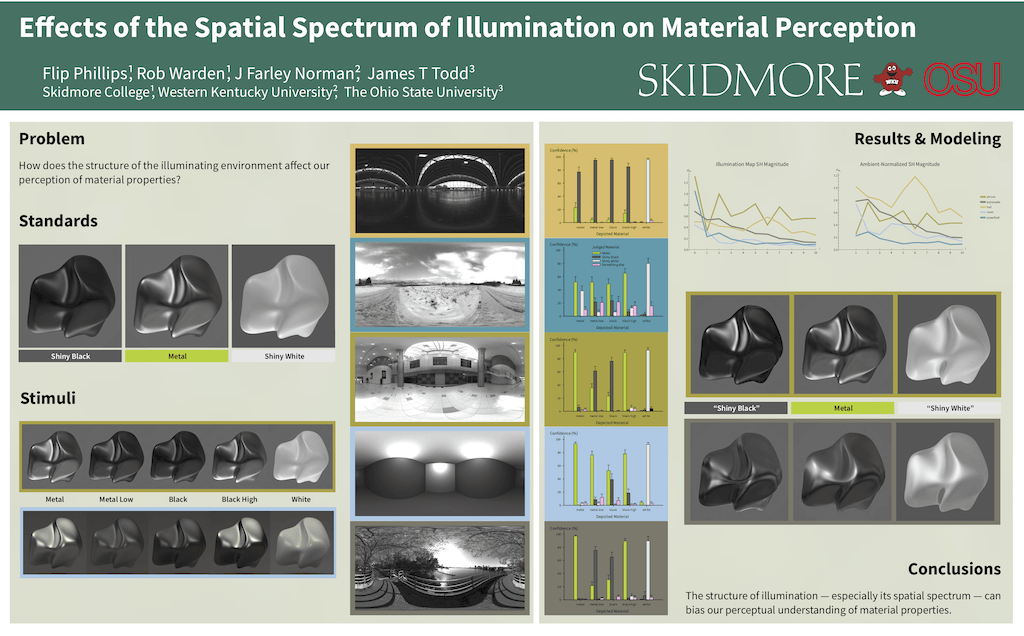
A poster from VSS2019, finally about to submit the paper. Looking at animation, physics, and the impossible yet perceptually preferable exaggeration therein. Phillips, F., Schmidt, F., Noejovich, L., & Chakalos, G. (2018). Exploring the Uncanny Valley. Journal of Vision, 18(10),…
Mel Lewis’ epic interviews with Loren Schoenberg on the history of drumming in jazz. A good while back, Jim Rupp lent me a bunch of CDs. He said “you’ll like these” and he was right. For years, I…
A visit to Champaign, a return flight with a ‘possible weapon’. I went to the 2019 Wolfram Technical Conference last week in snowy Champaign Illinois. I gave a talk on some stuff we were doing in our classes…
A talk I gave at the Wolfram Technology Conference, 2019. In our “Computational Methods for Psychology and Neuroscience” course, we teach undergraduate students the fundamentals of computational thinking (as opposed to traditional “programming”) using a project-based approach. Over…
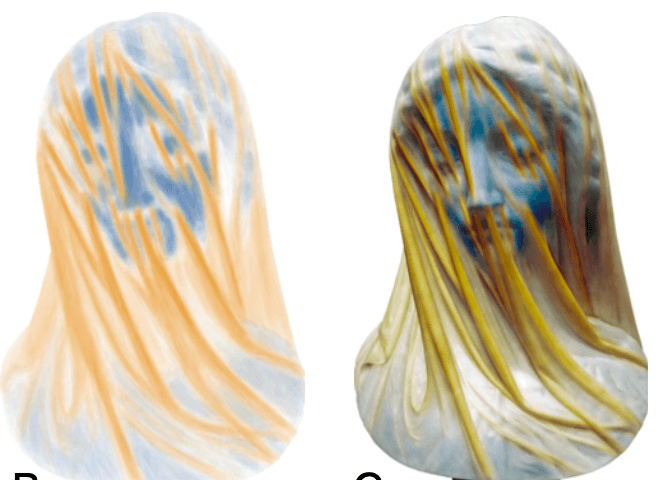
So many things on the burner. First – The Veiled Virgin paper has been submitted. We didn’t put it on a preprint server yet, we’re trying to figure out what we want to do there. If you’d like…
Time for a change of venue. A long time ago I left Pixar and went back to graduate school because I was interested in understanding more about the creative stuff we did — How the tools facilitated, constrained,…
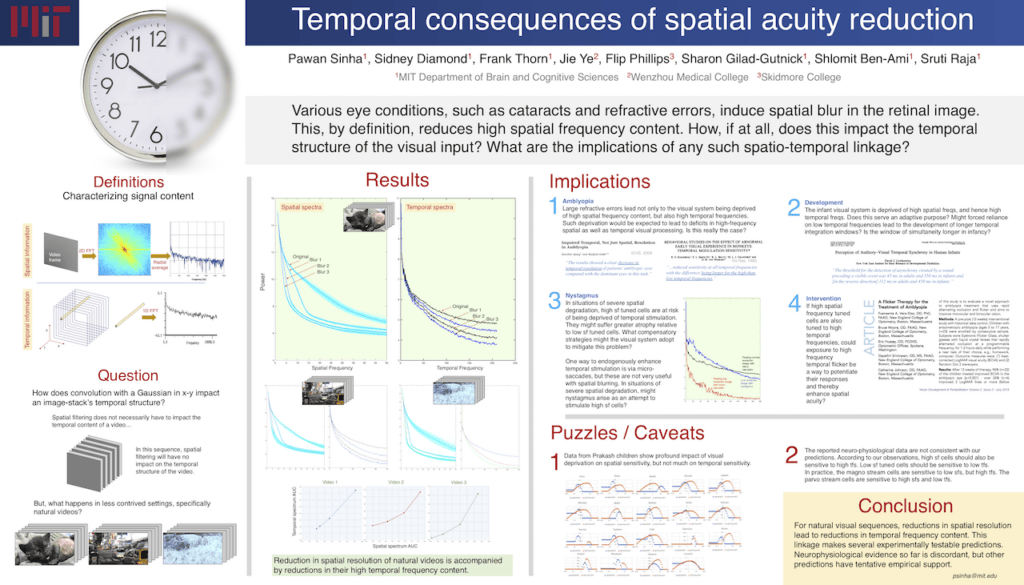
Space-time visual insanity. Some work I collaborated on concerning spatiotemporal vision. We have some very interesting findings hinted at in the ‘Puzzles’ section that I look forward to us getting out there. Temporal consequences of spatial acuity reduction…
A little VSS 2019 fun with some old friends. Old as in length of time we’ve all known each other, not in geologic age. Like all good science, things changed a little between abstract submission and the actual…
For a talk @ the ASU SciHub SciAPP Workshop on Science, the Arts & Possibilities in Perception. It is tempting to think of perception as some form of physical measurement. Indeed, animals seem to act as if they are…
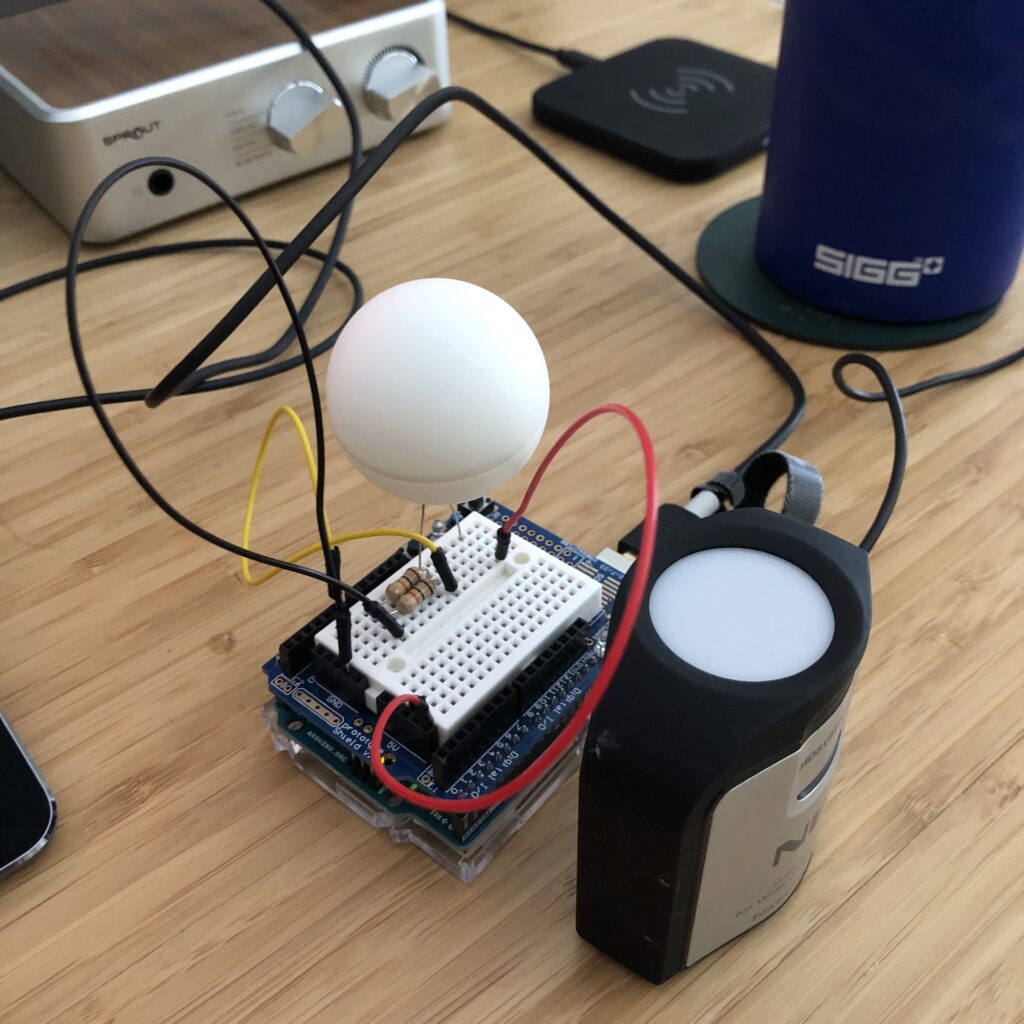
Well, OK, just measuring ambient light for now… but we’ll get there in class soon. Students in my Computational Methods class are using an Arduino to do some simple sensor measurement stuff. I found a bunch of old…
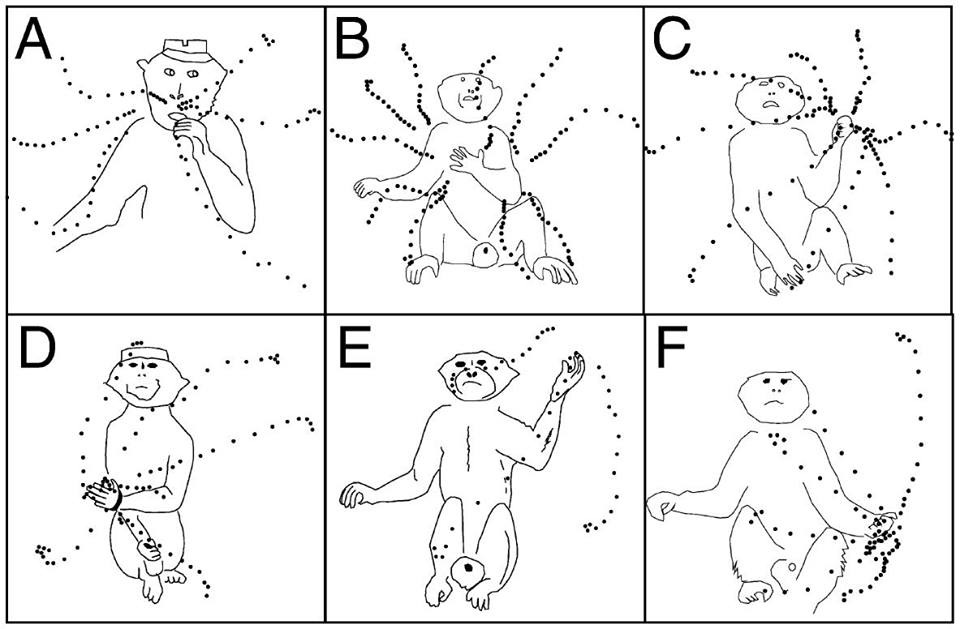
Some monkeys and some microstimulation. Courtesy of Gabe Diaz, a little scene from Graziano, Taylor and Moore, 2002. Dots indicate trajectory of the left arm after microstimulation of the right hemisphere PFC. Remember kids – PFC does everything!…
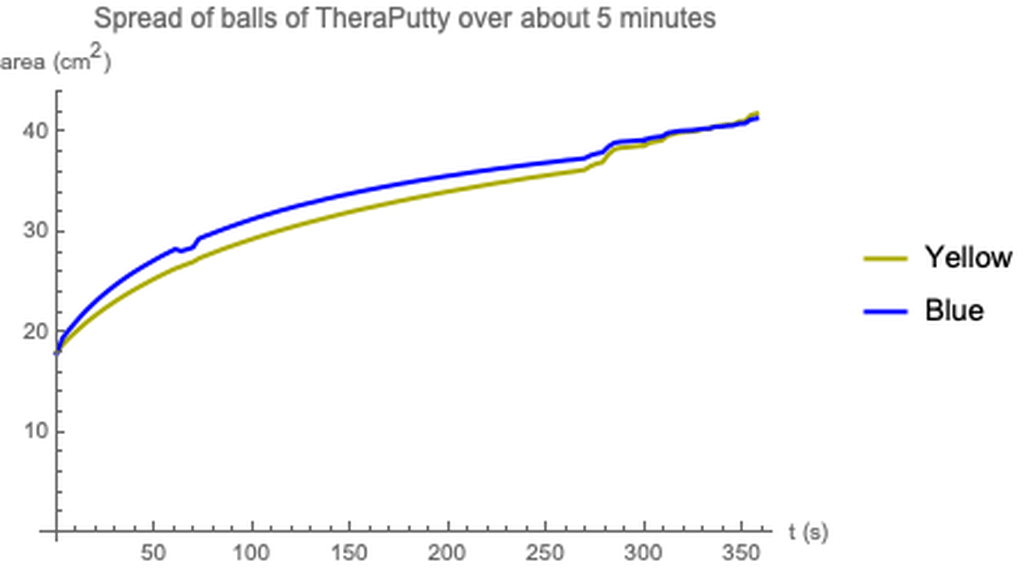
Yes, so many other things I could be doing, but this is more important – using a webcam, some Mathematica, and therapy putty. Somehow, as I age, I keep accidentally hurting myself. I know, weird right? So, while…
Wherein serious but silly scientific images are archived. A few months ago, I was having lunch with Sarah Creem-Reger at a conference at UofR. Somehow, the conversation got around to publishing and I relayed a story told to me…
A short piece about our wedding announcements, printed on a 100-year-old Heidelberg press via computer graphics. I posted an interview from fps Magazine a while back, and one of my old Wolfram Era Pals, Paul Abbott, asked about the wedding…
Unbeknownst to me until several year later, my dad kept a copy of this in his car to show anyone he ever ran into. Right after we completed knickknack, Animation Magazine did a story on the animation group at…
In 1984, I started working at the Ohio State Computer Graphics Research Group on a medical imaging project. In the same basement box with interview from fps magazine that I posted a bit ago, I found a few other…
Published from 1991-2010, fps was an excellent animation magazine with an impressive cast of regular contributors. Shortly after I left Pixar in 1992, the publisher Emru Townsend got in touch with Tony Apodaca and me for a long-running email…
Investigating the Teleology of Cortical Reorganization A growing body of evidence demonstrates that the brain can reorganize dramatically following sensory loss. Although the existence of such neuroplastic crossmodal changes is not in doubt, the functional significance of these…
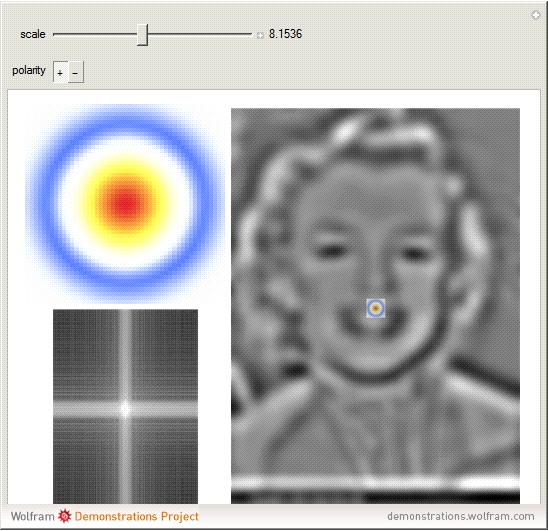
A demonstration written in Mathematica to show the interaction of the retina and LGN on the sampling of image information from the eyes. You can play with the receptive field size to see how the whole “Hybrid Images”…
Warts, cracks, causal shape segmentation. Research on shape perception usually focuses on the estimation of local surface geometry through cues like stereopsis, shading, or texture. Here, we argue that observers use these shape estimates to infer other object…
“The small things float to the top of… gravity” — Rickie Lee Jones Renaissance artists noticed that placing objects on a visible ground plane anchors them stably, making it easy to perceive their depth. Subsequently, they developed methods…
Balls! Bouncing balls. This is science so we gotta start somewhere. Mori’s Uncanny Valley phenomena isn’t limited to robotics. It has been observed in many other areas, including the fine arts, especially photorealistic painting, sculpture, computer graphics, and…
I’ve got strong last-minute game. Editing my VSS stuff on the Uncanny Valley. I’ll post something here when I get back.
Isn’t it beautiful? Gustav Fechner is widely respected as a founding father of experimental psychology and psychophysics but fewer know of his interests and work in empirical aesthetics. In the later 1800s, toward the end of his career,…
Before fMRI (Functional Magnetic Resonance Imaging) existed, I got to do this. We were one of the first labs to do this pre ‘functional’ functional imaging. Instead of volume rendering (which I would move on to Pixar to…
The first piece of work in did in the “Todd Lab” at OSU. I had just come off five years at Pixar and a year back in grad school in the Architecture and Planning department. I wrote most of…
Vision in Humans, Animals and Machines is a seminar / hands-on course where we engage in a sort of comparative neuroscience with respect to how organic and inorganic systems ‘see’. Some things are hard for animals, some things…
The goal of Computational Methods in Psychology and Neuroscience is to acquaint students with scientific computing, broadly speaking, but especially as it applies to psychology and neuroscience. Even so, it attracts students from a pretty wide swath of majors….
Haptic and visual ‘contours’ It is well known that motion facilitates the visual perception of solid object shape, particularly when surface texture or other identifiable features (e.g., corners) are present. Conventional models of structure-from-motion require the presence of…
Touching. In three experiments participants haptically discriminated object shape using unimanual (single hand explored two objects) and bimanual exploration (both hands were used, but each hand, left or right, explored a separate object). Such haptic exploration (one versus…
So much noise. A method for creating a variety of pseudo-random \`noisy’ stimuli that possess several useful statistical and phenomenal features for psychophysical experimentation is outlined. These stimuli are derived from a pseudo-periodic function known as multidimensional noise….
What is a surface, anyway? Two experiments are reported in which we examined the ability of observers to identify landmarks on surfaces from different vantage points. In Experiment 1, observers were asked to mark the local maxima and…
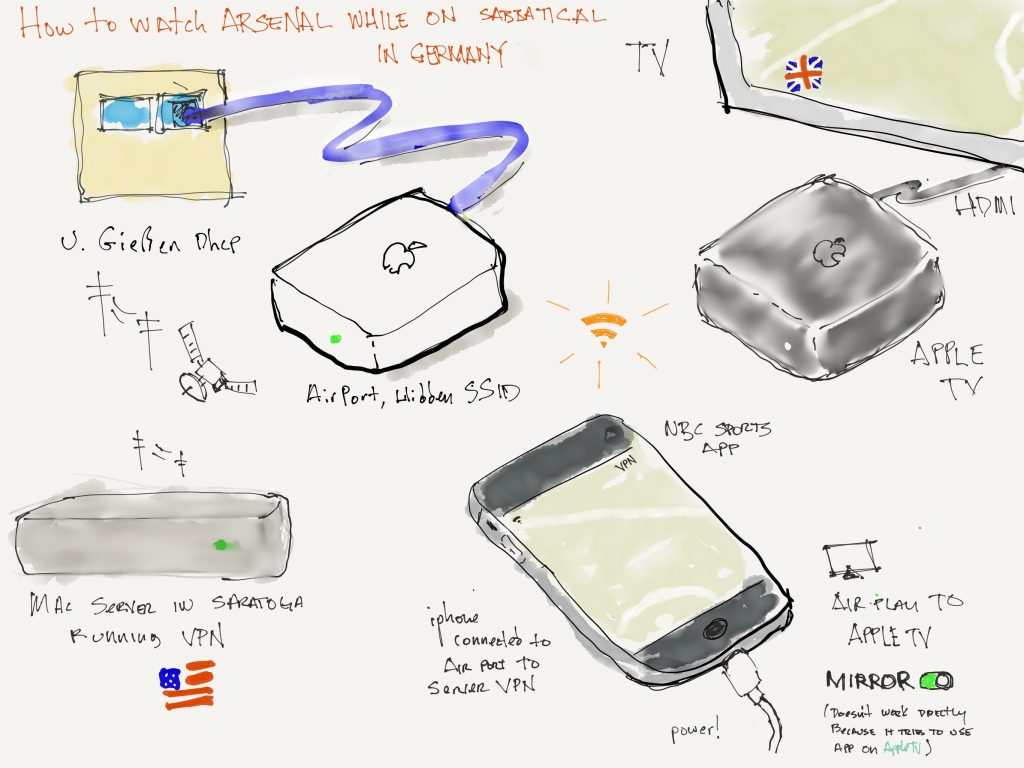
While I was on sabbatical in Gießen I was thrilled to have super (über?) fast internet and a nice television. Unfortunately for me, the good folks at Apple / Netflix / HBO / etc, don’t want people in…
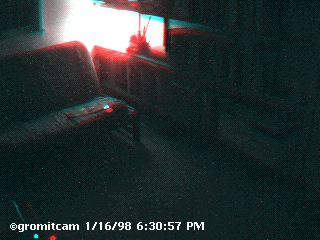
Back in 1997 I made a stereo webcam for keeping track of my dog, Gromit. I was rolling through some archives and found an image from January 1998. It used two Logitech golf-ball cams and a bunch of…
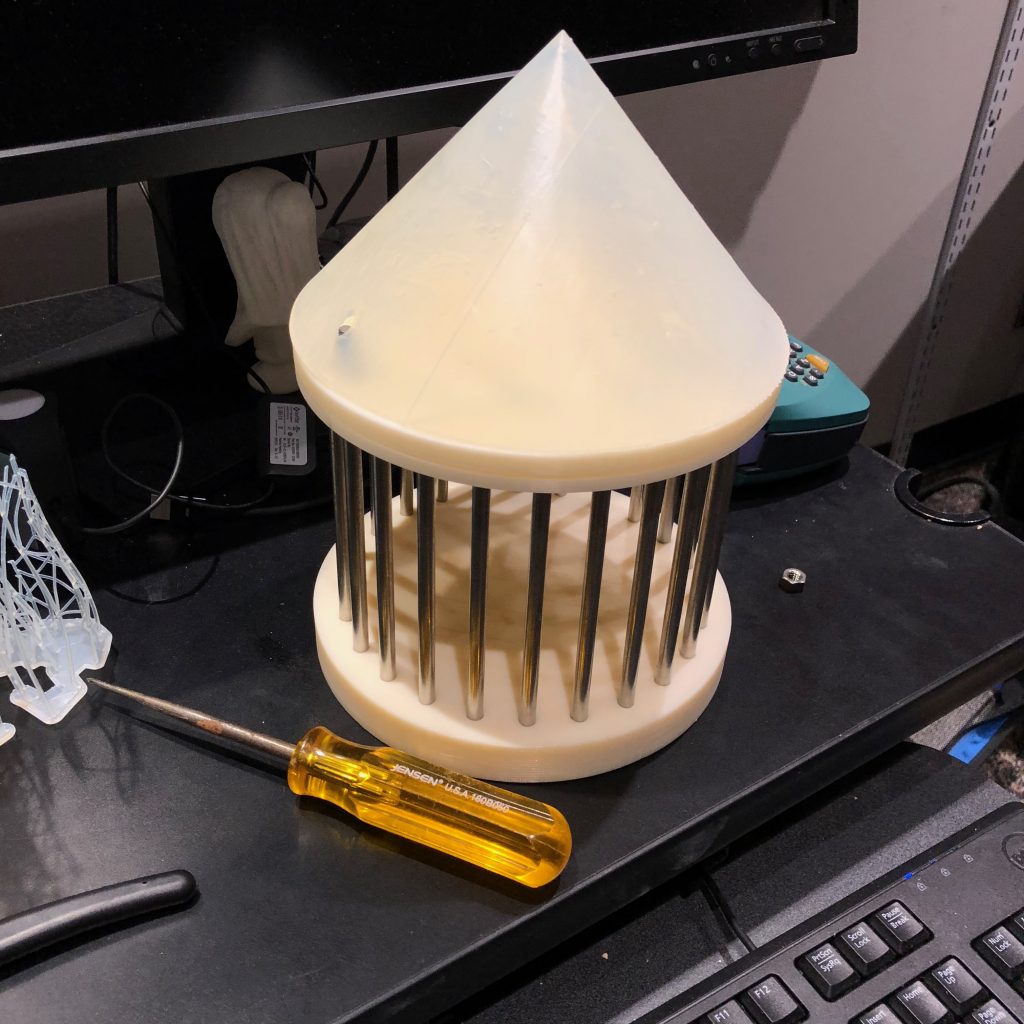
This is a rodent enclosure for behavioral experiments. We printed the main cage, post retainers and lid with ABS from our uPrint and the ‘stay off the roof’ roof with our Formlabs in a nice, slick durable resin….
This is a test of an embedded iframe of fun and joy. Please excuse anything annoying. \[advanced\_iframe securitykey=”c8f174978f95886638babe6f19ad6e691566779b” src=”https://www.wolframcloud.com/objects/daf49e5e-2e03-4c1e-b1c4-b5750bbd5fdc?\_view=frameless” width=”100%” height=”600″\] Most sincerely.
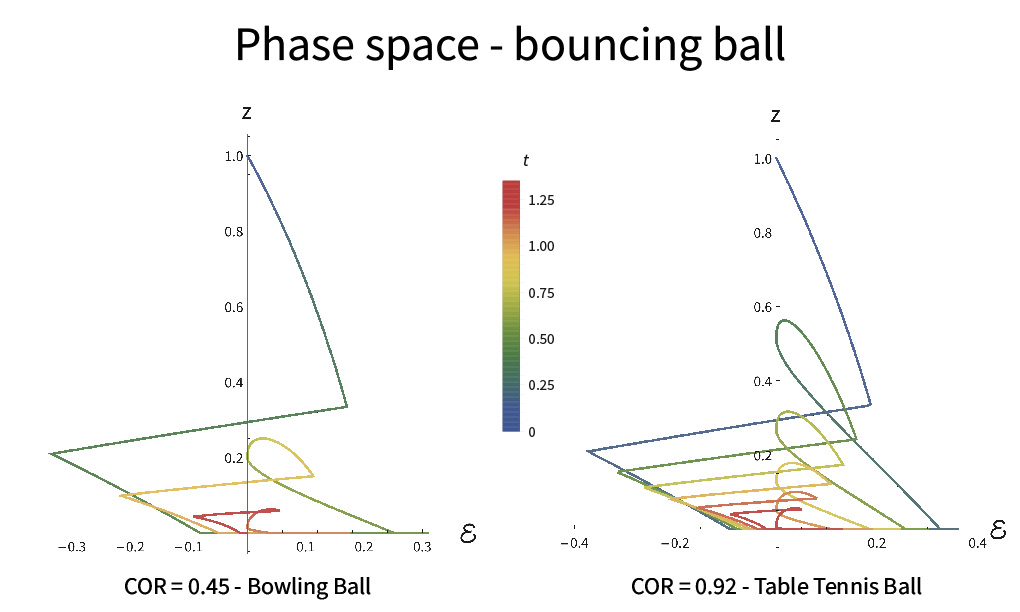
A phase-space plot of height v. exaggeration for two different types of balls with two different coefficients of restitution. Nothing important here, just a fun looking plot.
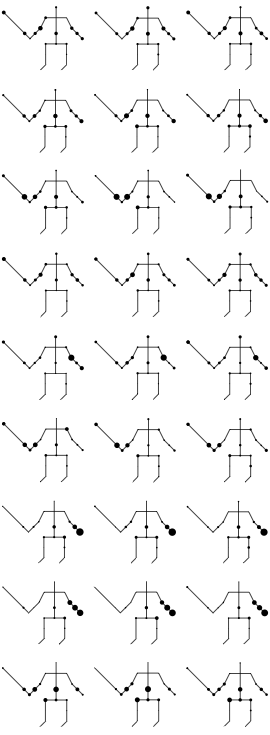
A while back, we did a nice study on eye movements during fencing. This is a figure from one of the posters, we should finish this and publish it some day. Should do a lot of things. …
I whipped up some simple syntax support for Mathematica / Wolfram Language in Microsoft’s VSCode. Grab it here: marketplace.visualstudio.com/items?itemName=flipphillips.wolfram-language.
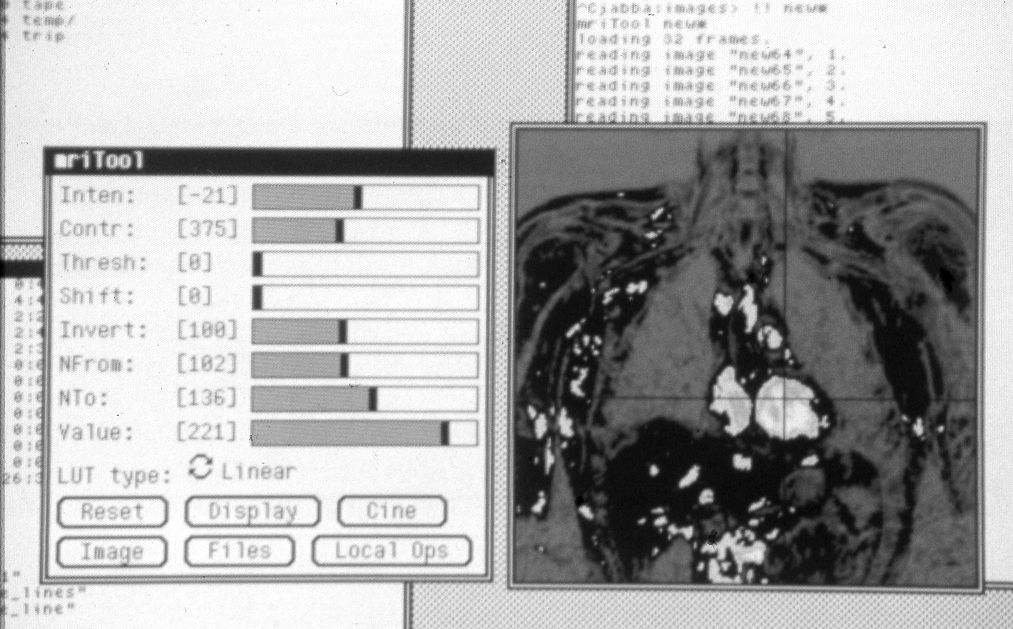
I was going through some slides for a talk today and I stumbled on this one from 1986 of a tool I wrote for analyzing cardiac ejection fraction. You can tell it’s old because it’s in black and…
Some data from the summer project on the Uncanny Valley. Can’t give it all away yet- but this is cool so far.
Here’s a screencast of my talk at the Rochester Institute of Technology Symposium on VR/AR Technology. It is from 3 December and a little low-key, so drink a little coffee before you start watching so you don’t fall…
A new pub with some good friends on the impending doom of science funding and what to do about it. Authored well before the new administration was a gleam in our collective eyes. Citation: Pawan Sinha, Peter…
For those of you looking for the course description of “Vision in Animals and Machines” that I failed to send to the Registrar, look no more! Vision in Animals and Machines PS-312, Fall 2017 This class will focus…
I was working on a project in Gießen last week and needed some code I wrote back in the late 1980’s / early 1990’s. Sadly, this is no replacement for the super cool FuzzyLogic Mathematica package (RIP). It…
Veiled Virgin Stuff for VSS 2017
I use Mathematica in many of my classes and all of my research. You may need to use it for some homework and projects. The versions installed in the Labs and other Public computers at Skidmore are usually a version or…
The Image Flow (ala Roland Fleming) of one of Eric Egan’s dissertation potatoes-
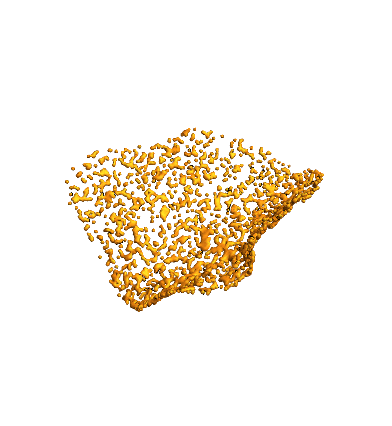
A sparse implicit surface. It needs to be less sparse.
I was younger then, and I lived near the water. I was doing MRI when they still referred to it as ‘NMR Imaging’. People got a little freaked out by the ‘nuclear’ bits. (But seriously, that’s my favorite…
I’ve posted the Glaven STL and OBJ object files in the Software, Data & Geometry section. Go have a look and let me know if you use them or even download them for that matter.
I’ve created a OBJ and STL repository of printable / renderable versions of Gibson’s ‘feelies’ haptic dataset. Go have a look and let me know if you download and/or use them.
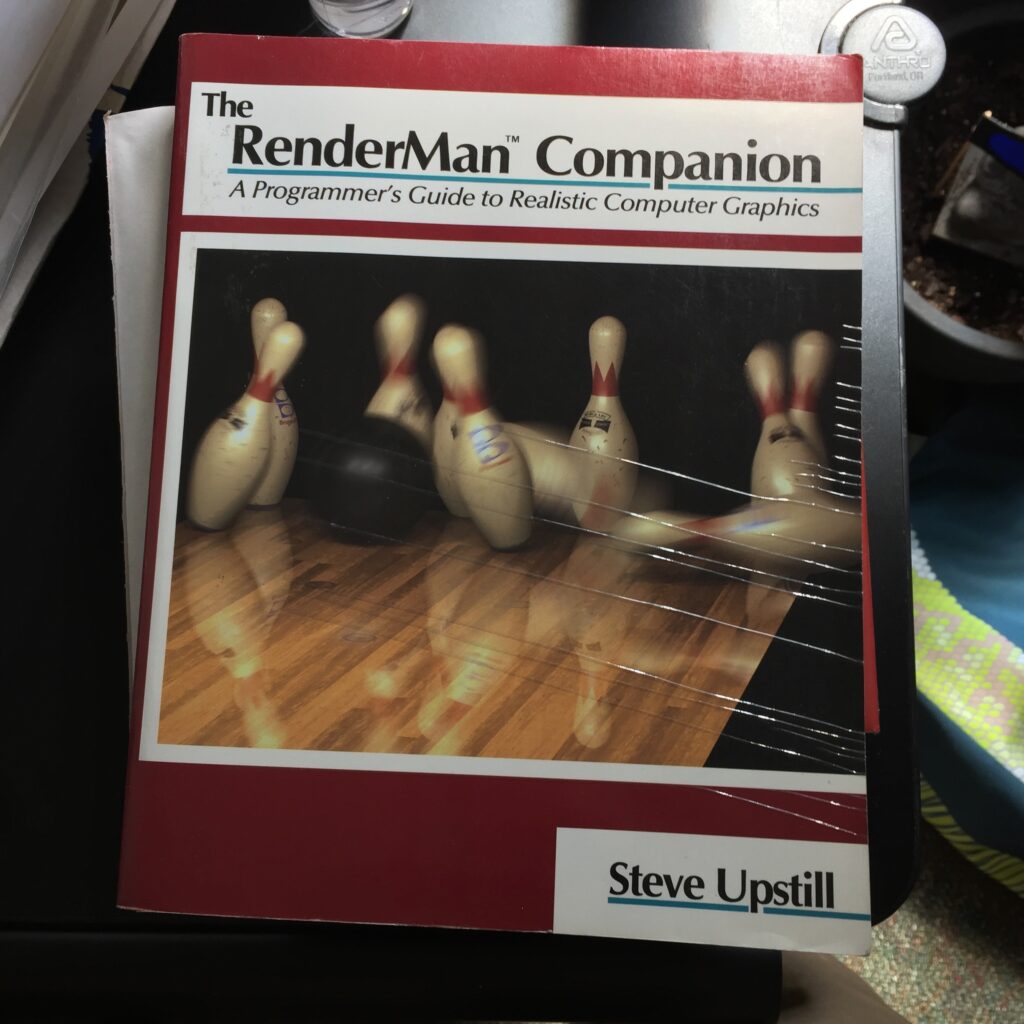
Here’s something that might interest the Pixar fans/geeks out there- I was cleaning up my lab today, and I found a copy of the RenderMan Companion (hey- I animated that cover image!) with a bookmark in it — more…
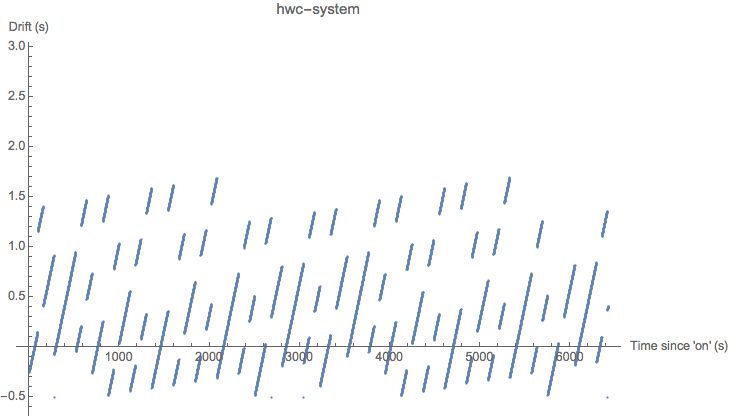
So I built a device that uses the Raspberry Pi + a Hardware RTC. I thought I’d look at the drift as reported by \`hwclock -c\` over the course of a day. So, here you go-
Some haptic exploration recurrence. More on this later- CORM!
An in-development look at some age judgement data. Not sure what it is telling me yet, but I can’t let that stop me from looking at it?
Gabe Diaz’ thesis from 2004. The goal of this research is to investigate the relationship between the abil- ity to recognize objects at very low contrasts and the duration for which they are presented. Empirical evidence suggests…
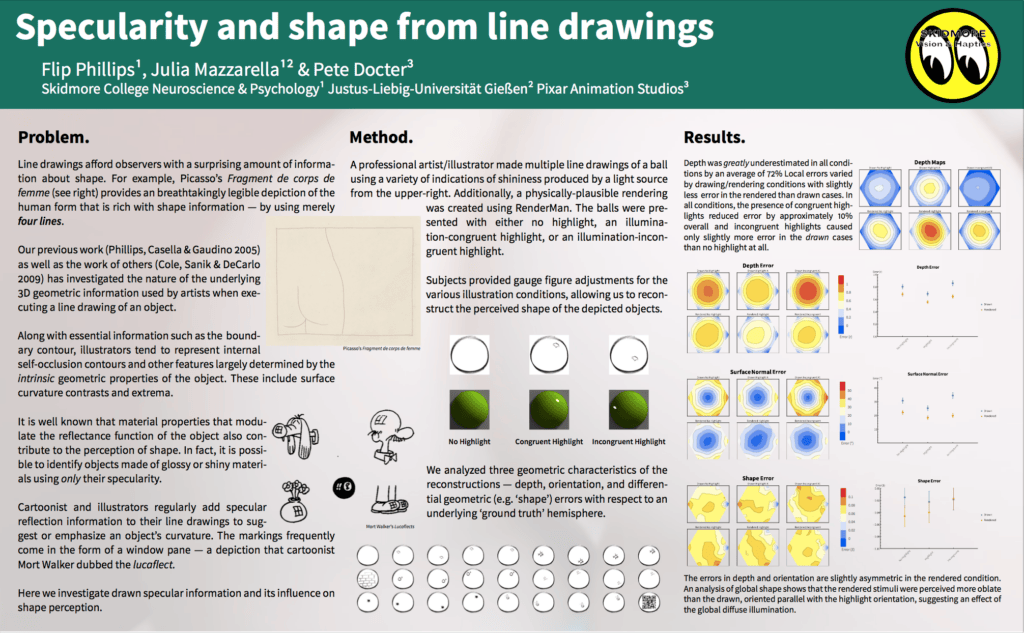
Indications of shape via specularity in line drawings. PDF here: Mazzarella2014
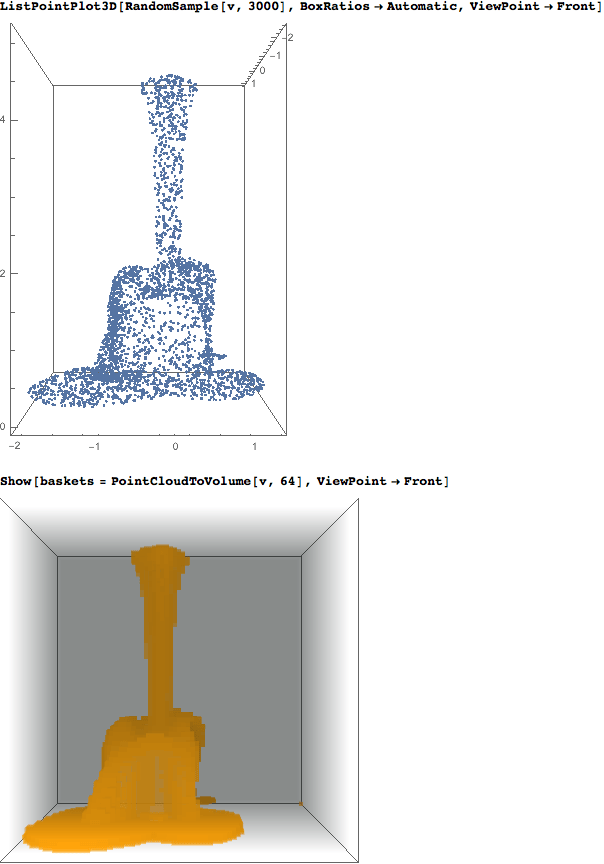
Doing a little work on a fluid-flow project with some folks here- Wrote a volume renderer for it, basically re-visiting work I did in 1986 at The OSU CGRG, which eventually was applied to stuff we did with the volume…
(21 March – Updated with more images…) I recently saw a post on twitter from @teenybiscuit, subsequently picked up by NPR here . You’ve probably seen it, dogs, muffins and a whole bunch of other things that look…
OK, just sort of messing around while making some stimuli for this experiment. I’m as creeped out as you are. I promise.
Some early experiment data with the Veiled Virgin. I could explain it, but it would give away the study before we even started. So, you’ll have to just do your best to figure out what is going on for now….
Yes, this is that classic ‘under construction’ post. I’m moving things around. Cleaning things up. Posting PDFs. Singing a little song.
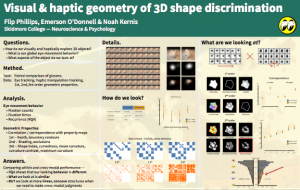
Phillips, F., O’Donnell, E. & Kernis, N. Visual and haptic geometry of 3D shape discrimination. Journal of Vision 15, 866–866 (2015). PDF Some preliminary work on ‘where you look when you’re trying to discriminate 3D objects.’ Turns out, it’s…
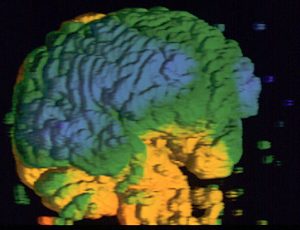
Torello, M. W., Phillips, T., Hunter, W. W., Jr. & Csuri, C. A. Combinational Imaging. Journal of Clinical Neurophysiology 4, 274–293 (1987). PDF Volumetric brain oblique. Rendered on a Pixar Image Computer, circa 1987. This is a schizophrenic…
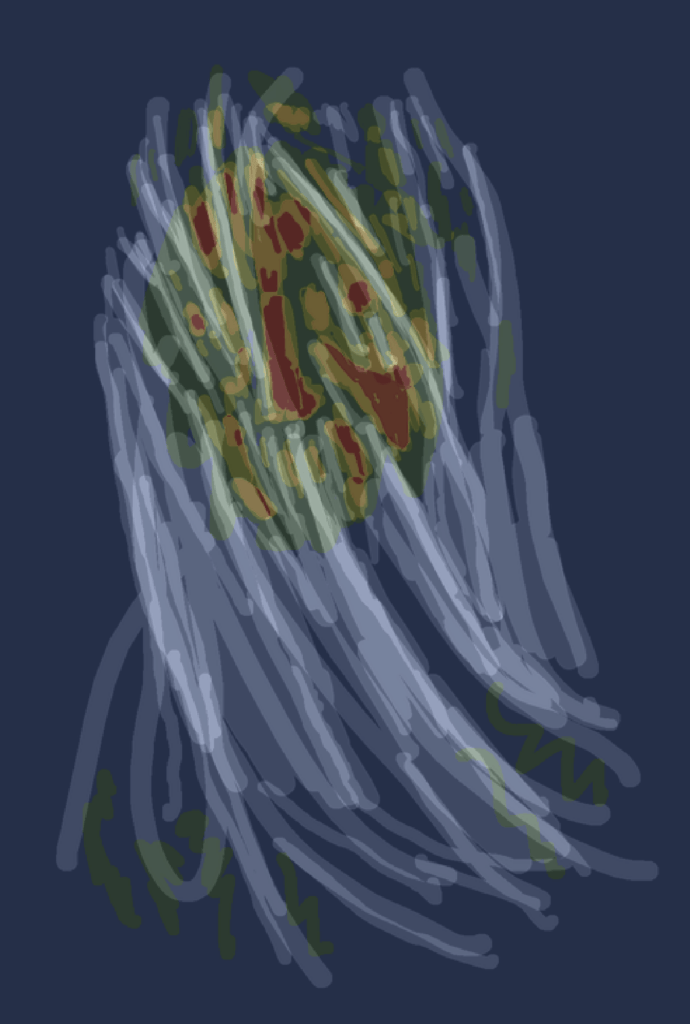
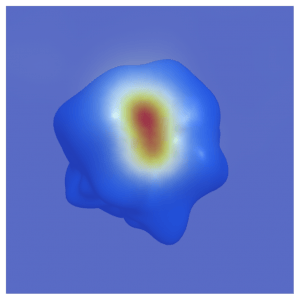
Some data from Emerson, Max + My summer work. Heat map, where one person looked while making shape discrimination decisions. I think I’ll take a vacation now.
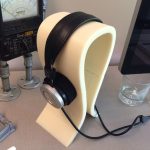
For my birthday I bought myself a nice set of headphones — Grado PS500. They were sitting on my desk, in a pile of coffee stained Natures and strange SkidShop snack-bags. So I designed and printed the following,…
You can create this: \[WolframCloudAPI id=”a99541cf-90ab-4b52-ab5c-cd6b632f4c7f” rule=”62″ step=”30″\] With this: \[wlcode\] CloudDeploy\[APIFunction\[{ “rule” -> Restricted\[“Number”, {0, 255, 1}\] -> 30, “step” -> Restricted\[“Number”, {0, Infinity, 1}\] -> 50 }, ArrayPlot\[CellularAutomaton\[#rule, {{1}, 0}, #step\], Frame -> False\] &, “PNG”…
One of the things I love about using Mathematica is that it helps me better understand the nature of my programming and problem solving. It’s a great tool to help make sense of problems, see your errors, verify…
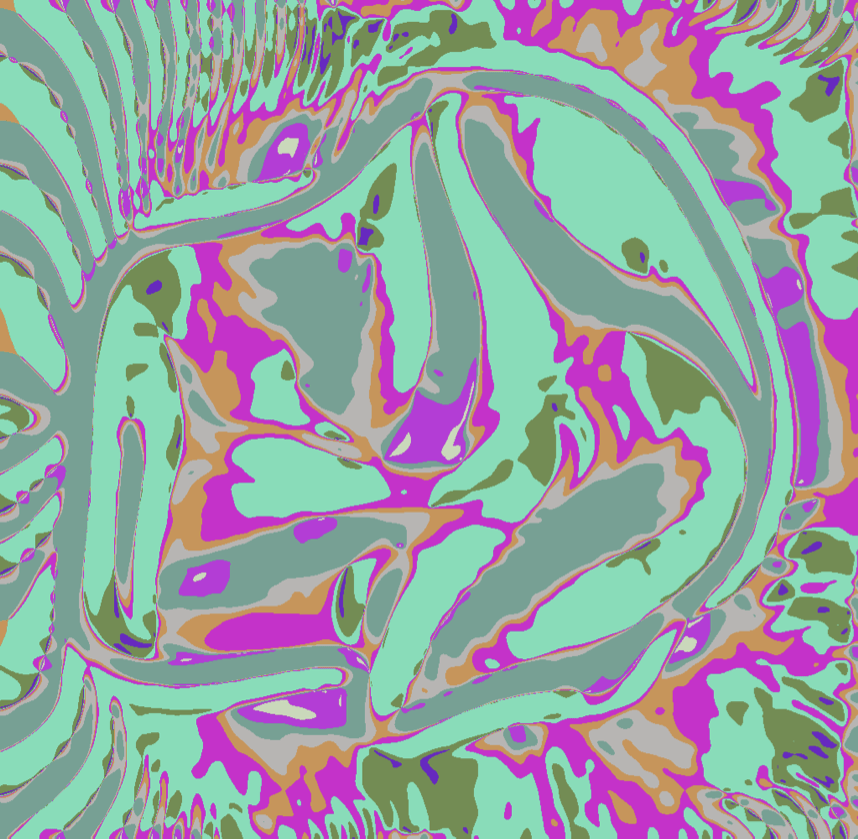
Some days, things don’t go well, but you end up with interesting looking things anyway.
Very preliminary, for Eric. \[WolframCDF source=”http://flipphillips.com/wp-content/uploads/2014/06/Glerp.cdf” width=”433″ height=”520″ altimage=”/images/uploads/2014/06/Glerp.png” altimagewidth=”433″ altimageheight=”520″\]
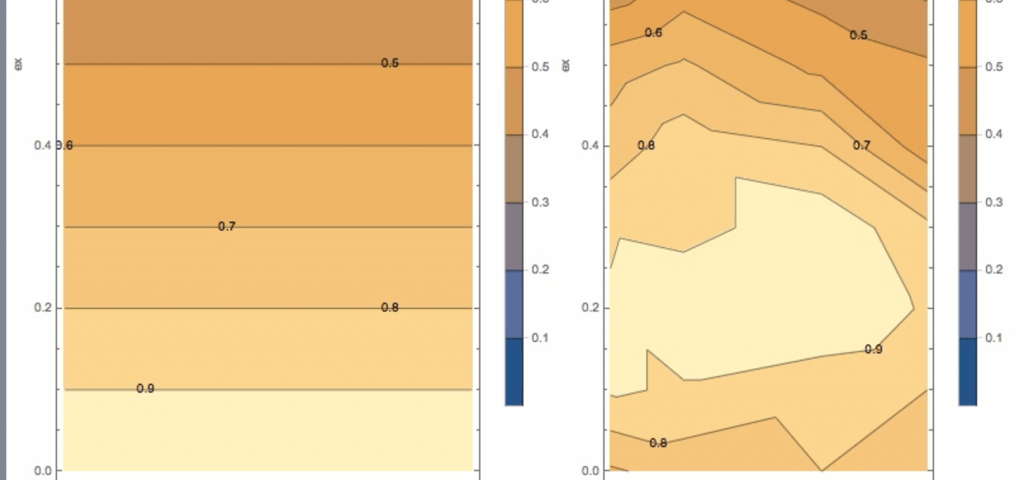
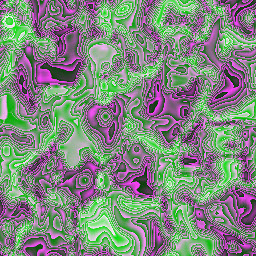
\[WolframCDF source=”http://flipphillips.com/wp-content/uploads/2014/06/wtf.cdf” width=”320″ height=”415″ altimage=”https://academics.skidmore.edu/blogs/flip/?p=432″ altimagewidth=”” altimageheight=””\] A small issue with a contour plot based on a very efficient Value Noise implementation (well, efficient for Mathematica). It eventually looks like this, which is the ‘right thing’ \[WolframCDF source=”http://flipphillips.com/wp-content/uploads/2014/06/notwtf.cdf”…
Doing a sort of gigantic parallel computation in Mathematica. A little too gigantic, I’m afraid. Um- can IT deliver my new MacPro sooooon? Pleeeeease?
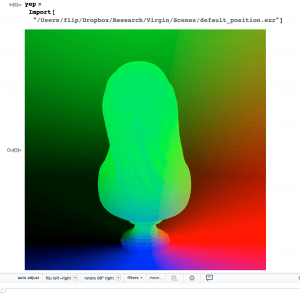
I was trying to figure out why there were shading artifacts on a 3D object I created for some vision experiments. I’ve got a metric-ton of Mathematica I’ve written over the years for doing computational geometry and it stood…
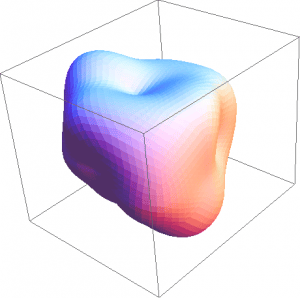
Back in 1987 I wrote some code for generating ‘noisy objects’. I cleaned up that code over the years, enhanced some calculations, played with new Mathematica features. Now I’ve got stuff that looks like this. I’ll put a…
Here’s Phillips, Mazzarella & Docter (2014) for VSS. Get the PDF here Phillips2014 (Draft of 13 May). Specularity and shape from line drawings. If you’re in Florida next week drop in and say ‘hi’. Or not. An interesting thought: this could…
Going to have to hurry up to get my stuff ready for VSS. So much data, so little time. A project I’m working on with Julia Mazzeralla and my ol’ pal Pete Docter.
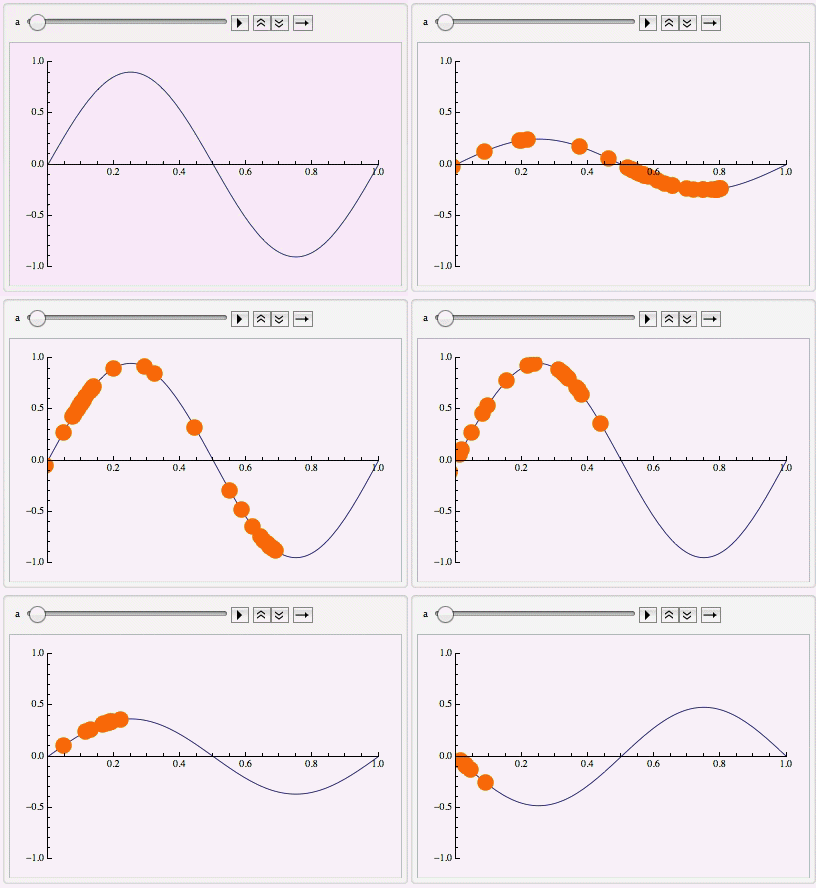
A friend of mine asked me a question about the way that standing waves make sand on a 2D plate make pretty patterns. So, I whipped up a quick 1D example in Mathematica. I threw 50 randomly distributed…
More analysis from Dave Jacobs’ eye tracking project. We wrote all the analysis code ourselves in Mathematica. There’s a bug in the heat map compositing, but I shall procrastinate a solution soon. Lifted largely from Eye Tracking: A comprehensive…
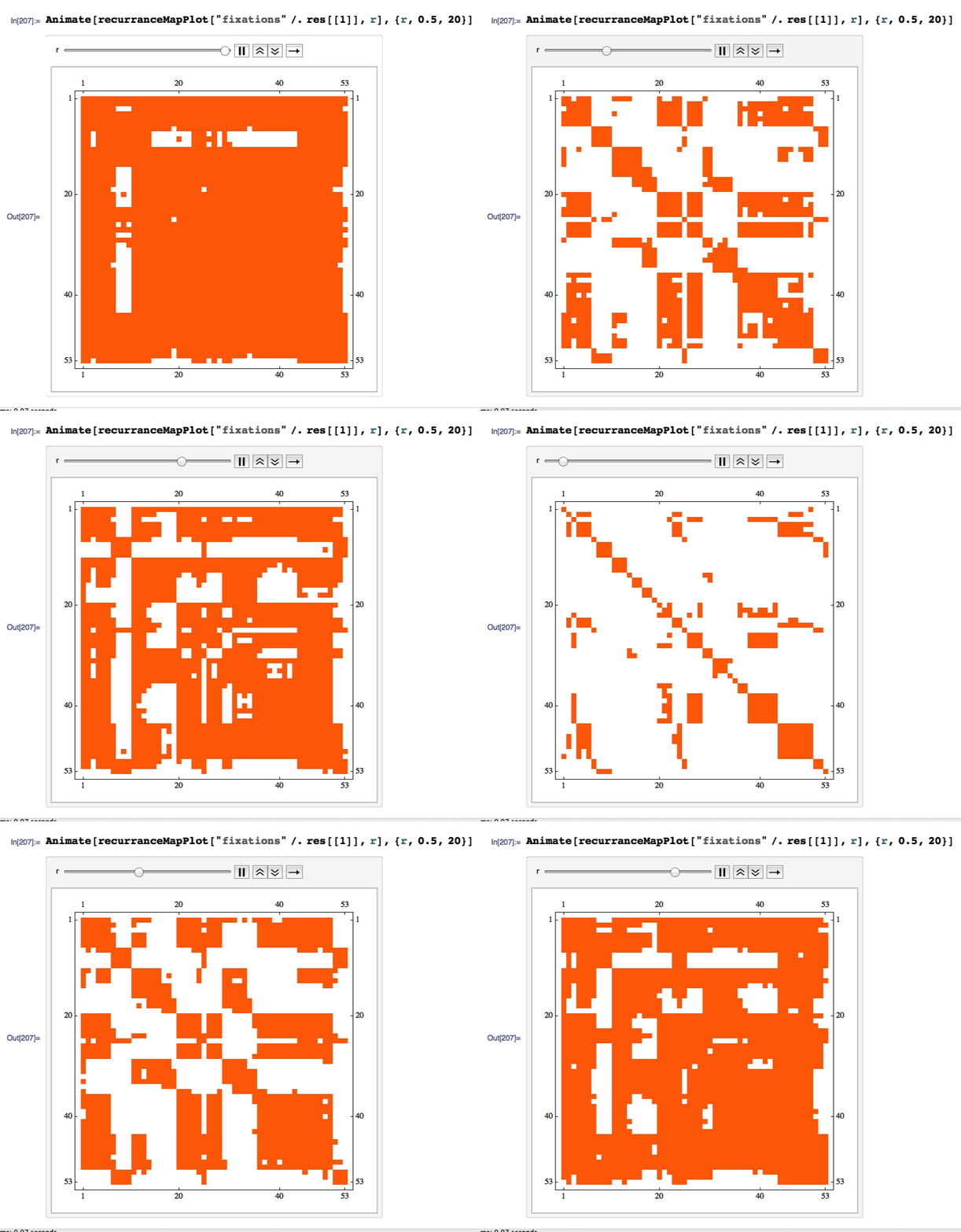
Eye tracking recurrence ala Anderson et al. 2013. With Dave Jacobs and the amazing Yarbus and Babcock software packages.
Curvature field calculations for a random noisy shape. Colors represent magnitude of curvature. Iso-contours also shown in lovely pink.
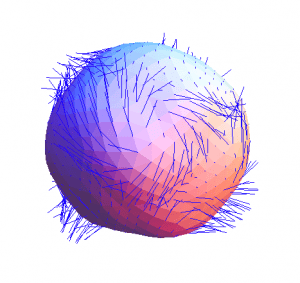
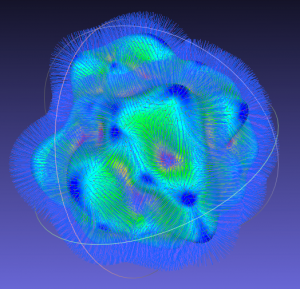
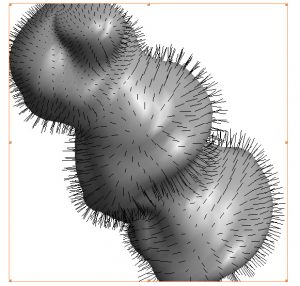
Hairy elongated noisy stimulus. The lines are surface normals, sampled across the object. They are generated using a continuous random method (sometimes called ‘noise’) and were used to test symmetry perception in 3D shape. …
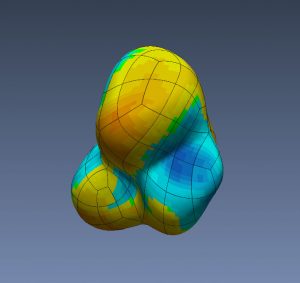
A stimulus, # 13, otherwise known as ‘golden boy’ Colors indicate mapping of under- and over-sculpt from a shape production experiment where we had artists and non-artists reproduce shapes using only vision, touch, or some combination of both…
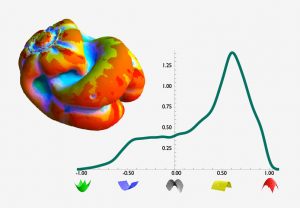
Statistical distribution of shape on a 3D object. A bell pepper from Norman et al. Each color represents a class of shape ala Koenderink’s “Shape Index”. The histogram below shows the distribution along with a key to the…
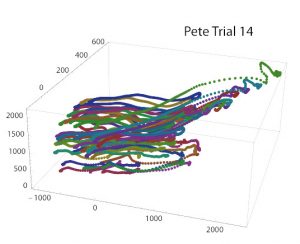
A set of motion-capture trajectories for the Anticipation of Sabre Fencing Attacks paper by Pete Possidente and I. You can see the ‘whip’ of the tip of the sabre at the end of the attack (green dots on…
Photon noise. Light… noisy. Shhh. If you listen, you can hear it. Rendered via RenderMan.
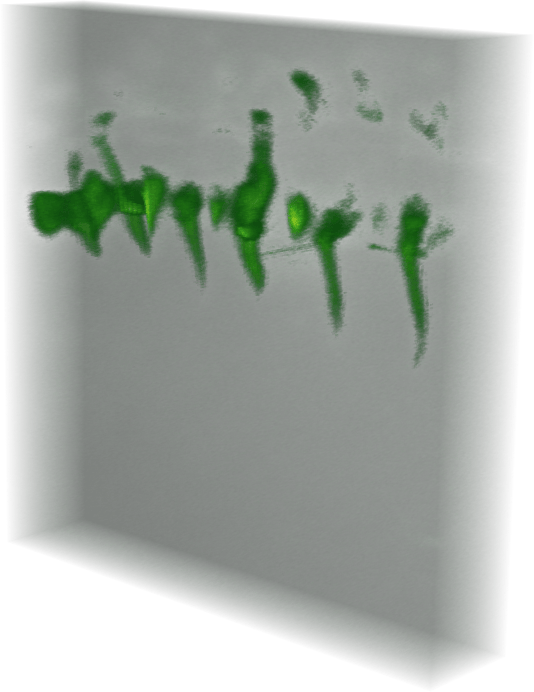
A volume rendering (again, via Mathematica) of some developing neural structures in zebrafish. With Aaron Beck and Jen Bonner @ Skidmore.
I notice that I seem to generate a lot of images while doing analysis, largely using Wolfram Research’s Mathematica… so, maybe every day I should post one of those images here- an image of something I’m working on,…
We were just discussing interesting candle-scents in my Computational class. Just thought of a new one: Lab Report
Scheduled my pickup. Now to just avoid looking like a total tool while wearing them. To quote the great Keavin Meany… “I don’t care, zoom zoom zoom”
A friend was talking up his ‘hand-made’ web site recently. Apparently, websites that appear 1994 vintage are all the rage these days. As a follow up, some suggested that he used ‘Artisanal HTML, locally sourced’, and I thought…
More fun things we could do with the lab’s printer: 3-D printer helps save dying baby – CNN.com. For the full NEJM article, see http://www.nejm.org/doi/full/10.1056/NEJMc1206319
Some of my students probably have something to say about this- Science fairs: rewarding talent or privilege? | Sci-Ed.
Neuroscience needs its Einstein – Salon.com “I was a liberal arts major, prefer stories to hard facts, questions to answers. I prefer ambiguity, mystery and awe to bottom-line explanations. I’m personally offended by fundamentalist and reductionist beliefs, be…
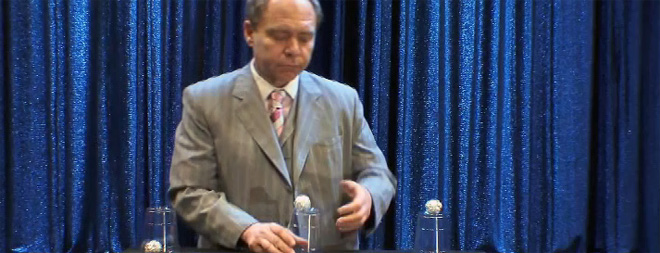
Here is that article again, this time from Scientific American. Magic Revealed: Cups Trick Found to Be More Effective Than Thought: Scientific American.
Ancient Magical Illusion Even More Effective Than Magicians May Realize | Inside Science. I am quoted herein. Let’s hear it for 1) magic and 2) a new open-access journal making the scene. Here’s a link to the…
Indeed we are totally screwed once they realize that it was us who invented lightbulbs and bug zappers. Moth Drives Robot (VIDEO).
Sci² Tool : A Tool for Science of Science Research and Practice.
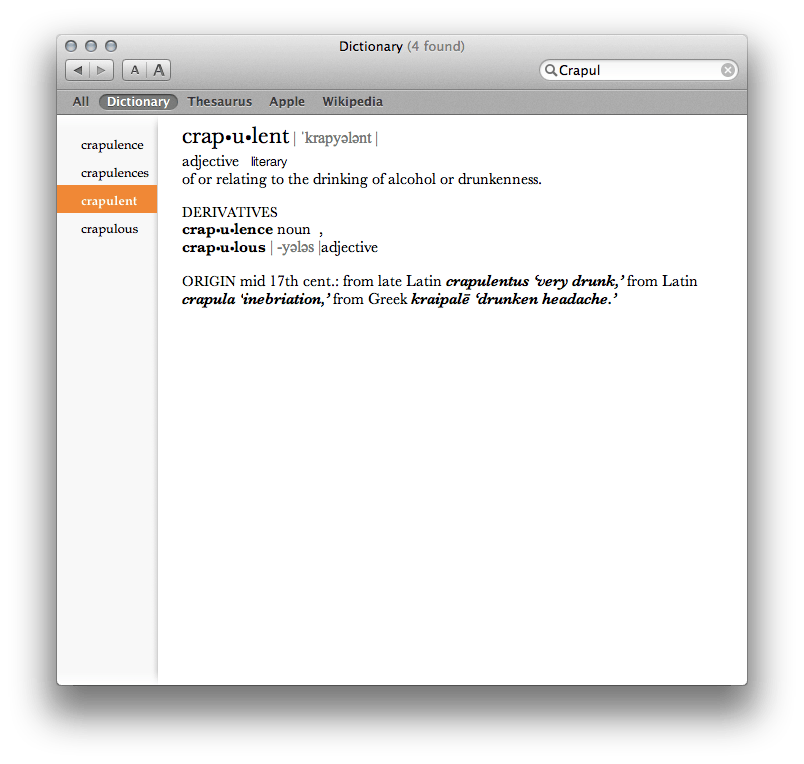
I was watching my Mac OS screen saver go by, it was randomly on dictionary…
Programmer Interrupted. A very interesting piece of research on being interrupted whilst writing code. … the office is where we go to get interrupted.