Enhancing research with Plenary Labs

A new pub with some good friends on the impending doom of science funding and what to do about it. Authored well before the new administration was a gleam in our collective eyes.

 
Citation: Pawan Sinha, Peter Bex, Margaret Kjelgaard, Flip Phillips; Enhancing research with Plenary Labs. Sci Public Policy 2016 scw051. doi: 10.1093/scipol/scw051

Abstract:

The two most evident crises in the advanced research ecosystem in the USA are scarcity of funds and scarcity of jobs. We argue that both of these are outcomes of a flawed resource usage model and propose an alternative approach that can help alleviate these challenges. Named ‘Plenary Labs’, this approach is designed to act as a counterpoint to the traditional schema wherein each laboratory acts as a self-contained silo with a full complement of equipment and personnel to advance the principal investigator’s research program. This schema results in redundancy across labs, as well as an inflated need for research assistants. Plenary Labs ameliorate both of these issues by consolidating equipment and technical manpower. By democratizing access to cutting edge resources, reducing the time and costs involved in experimental research, and reducing the imbalance between supply and demand for jobs, Plenary Labs have the potential to significantly enhance research.


Free Access: Grab a delightful open access copy here.
 

Quick class description

For those of you looking for the course description of “Vision in Animals and Machines” that I failed to send to the Registrar, look no more!

Vision in Animals and Machines

PS-312, Fall 2017

This class will focus on ‘vision’ in its many forms — ranging from single-celled animals to complicated ‘artificial intelligence’ based computer vision systems. We will survey the biological and evolutionary processes that led to our human sense of sight as well as how both natural and artificial systems have influenced our understanding of ‘vision.’ We will explore computational models of human vision as well as current state-of-the-art deep learning techniques for image and scene identification. Ultimately we will settle once-and-for-all whether ‘vision’ as practiced by machines bears any resemblance at all to the behavior of ‘vision’ in natural systems.

Contact flip@skidmore.edu for information.

Fuzzy Logic package for Mathematica

I was working on a project in Gießen last week and needed some code I wrote back in the late 1980’s / early 1990’s.

Sadly, this is no replacement for the super cool FuzzyLogic Mathematica package (RIP).

It is simply the ten fuzzy boolean operators + a few things here and there that add to the fun. It implements the traditional ‘Zadeh’ operators, along with Yager and HyperbolicParaboloid variants, selectable with Method.

Let’s hear it for being a complete packrat. Added to the Software, Data & Geometry page is a very old fuzzy logic package. You can make a direct hop over to GitHub here.

More drawing research

Veiled Virgin Stuff for VSS 2017


Getting a Student License for Mathematica at Skidmore

I use Mathematica in many of my classes and all of my research. You may need to use it for some homework and projects.

The versions installed in the Labs and other Public computers at Skidmore are usually a version or two behind. Luckily, we have a site-license for students. Thus, you can get your own, most up-to-date copy.

NOTE that the instructions have changed and have a ‘home’ now at https://flipphillips.com/mathematica


Let me know if you have any trouble.

Image Flow Calculations

The Image Flow Potato of Eric

The Image Flow (ala Roland Fleming) of one of Eric Egan’s dissertation potatoes-

The Image Flow Potato of Eric

Implicit madness

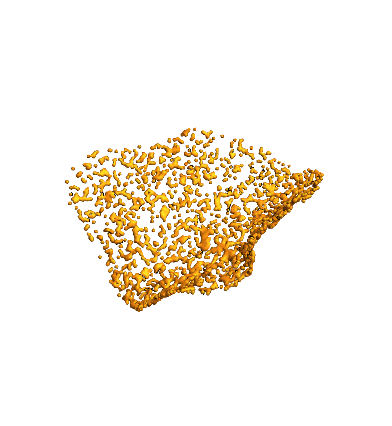
A sparse implicit surface. It needs to be less sparse.

zmap

OSU MRI Flashback – 1984

I was younger then, and I lived near the water.

I was doing MRI when they still referred to it as ‘NMR Imaging’. People got a little freaked out by the ‘nuclear’ bits. (But seriously, that’s my favorite era for the Ohio State logo.) I do believe that the day I got that ID was among the happiest in my up-to-then life, for some reason.

osu-hospital-id

Glaven Object Files

Glaven 13

I’ve posted the Glaven STL and OBJ object files in the Software, Data & Geometry section.

Go have a look and let me know if you use them or even download them for that matter.