
Audition Tape for Eastman and Berklee

Cringe!
Apple being Apple and Apple Music being Apple Music, I recently ‘lost’ some digitized tapes from gigs I did. My total faith in the cloud (Apple Music Cloud to be specific) meant that I had to go back to the original tapes and re-digitize them. Most important among them was a concert at Creative Music Studio by Pat Metheny, Jack DeJohnette, and Dave Holland on New Years Eve 1981-82. I was a student there over the winter (while I was still in high school). The heating and hot water went out the day I arrived, 17 years old, driving a van from Ohio to the Catskills. I slept and showered in near-arctic conditions for a few days. Oh – and I learned once I got there that the whole menu was vegan.
We snuck out a few nights, in an ice storm, and drove to the Bonanza Steak House in Kingston.
My now-college going girlfriend had just done the completely predictable thing over the fall quarter and, being a teenager, I was a bit beside myself —
Anyway –
In the old tape case — My brother’s first album, an interview with KQED about Pixar from 1989, a David Bowie master DAT from a project I worked on, the Creative Music Studio performance, some Flintstones music cues, classic traded tapes like Tommy LaSorda yelling, Coppola yelling, etc.
I’m really glad I held onto the physical media, and that one of my colleagues here in the sound department held on to a very nice pro Marantz cassette player. (Redacted public radio station) inventory stickers, balanced IO and everything!
And – the amazing cringe machine that is me at 17 years old, and my audition tape for Eastman Jazz and Berklee.
I got invited for in-person auditions for both. Dad (a musician) and Mom (a musician’s widow) especially didn’t want me to be a jazz musician. So I went to architecture school, learned that computers could make pictures, etc, etc.
Listening to that tape brought back really awkward 17 year old me memories. Sort of wish I would have followed that path sometimes. But, that stuff isn’t re-negotiable.


I Was a Teenage (well, 22 yr old) Model for a Lamp

In which I jump over a trash can.
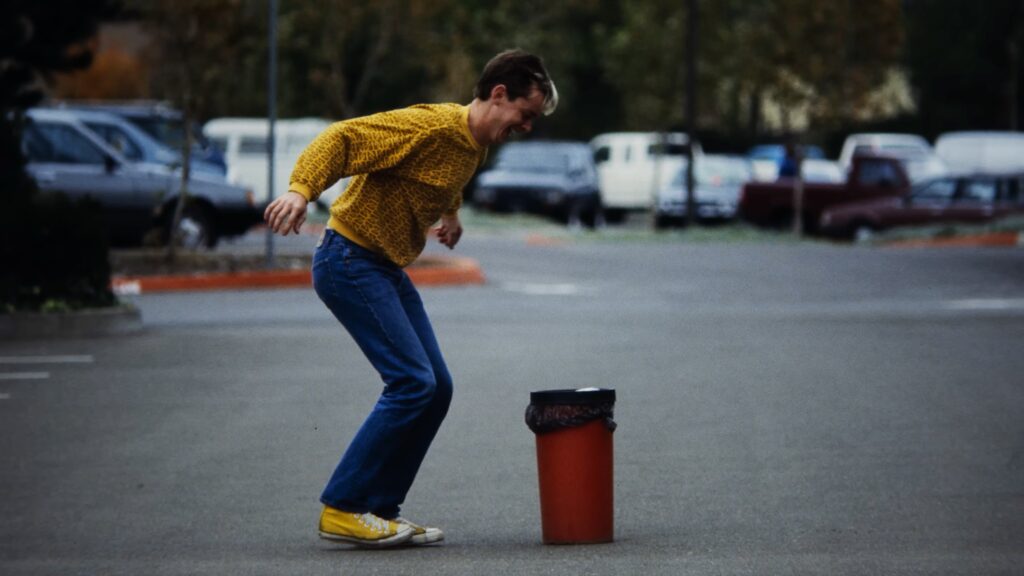
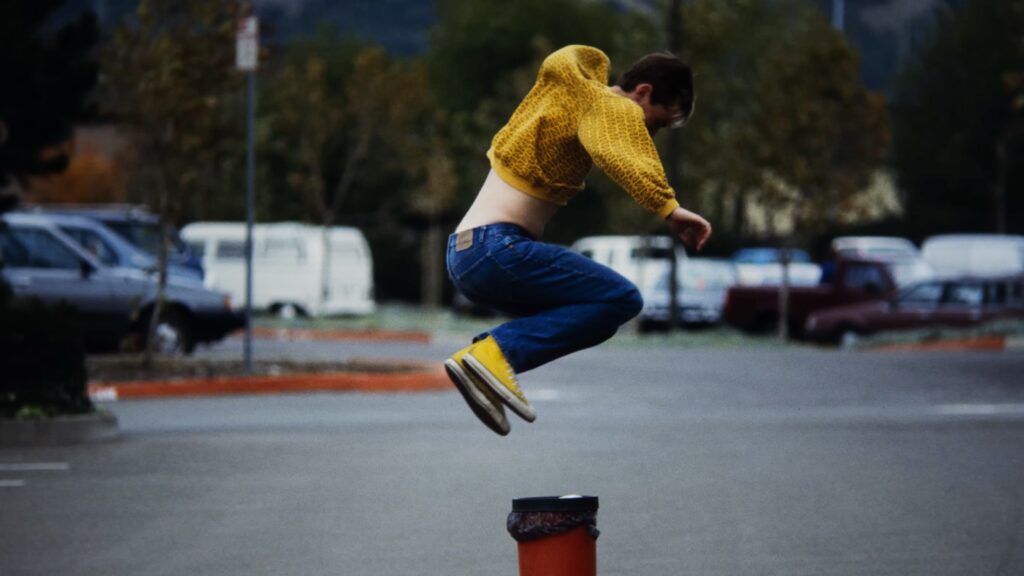
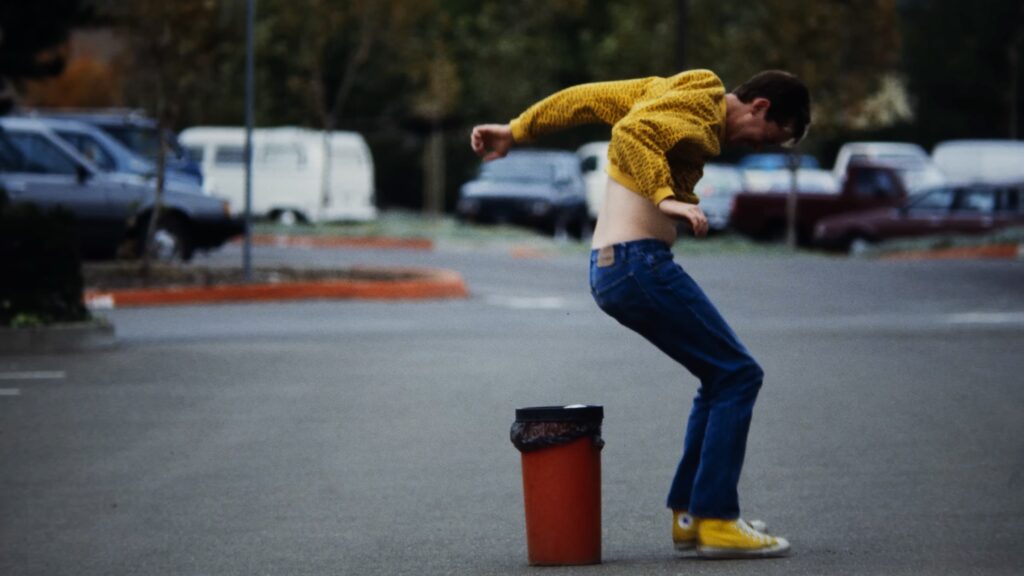
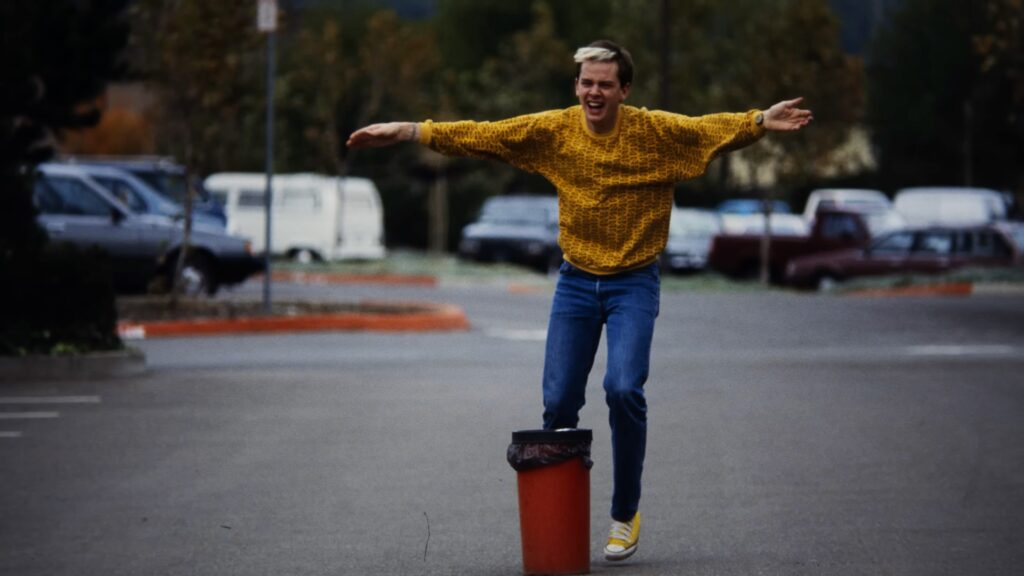
We did a lot of reference footage, back in the day. Here, specifically, in the mid 1980s, we wanted some reference for Luxo, Jr. So, out to the parking lot and time to jump over a trash can. For those of you unfamiliar with the practices of animation, animators like to use reference images for animation. Many animation desks featured mirrors for capturing self-generated facial expressions. This particular sequence was literal 16mm film, probably with a Bolex, by David DeFrancisco.
I had totally forgotten about the sequence (but not the drip, I really liked that sweater, The Gap). It showed up at about 8:00 in this 40th Anniversary PIXAR piece.
Those were some fun times, fun people, old friends, 80s hairstyles.
Hayao Miyazaki gave me this Cat Bus. No you can’t have it.

Back in the late 80s, Hayao Miyazaki came to visit Pixar. He brought gifts.

He had something for everyone, he gave the animation group a Seiko Talking Pyramid Clock. Craig Good and I spent the afternoon trying to click the thing in interesting patterns to get it into some sort of debug mode or, you know, eventually totally disable it. We tried all sorts of things, holding buttons, clicking the pyramid, holding it upside down. We got it to make weird noises but that’s about it.

He gave JL an aluminum briefcase with laser disks of all his movies. That was pretty cool. Craig and I got Cat Busses. Cool enough! I still have mine, it sits in my office where I get to tell this story to students who may or may not believe me.
Cool enough.
Mine was missing a screw. Craig loaned me a screw, which I took to the hardware store over by Shamrock Concrete1 and they really didn’t have anything that small. No bother, one of the toys I took apart in Pete + My office toy box had the same size.
Cool enough.
- Most ironically wonderful name ever. ↩︎
David Bowie Wants Ideas

I grew up just down river from Ann Magnuson, one half of Bongwater. They informed the world of David’s needs in this wonderful song.
In between leaving Pixar and starting back to grad school, I connected with then-former Pixar buddies Rob Cook1 and Ty Roberts. Rob is responsible for a variety of great things in RenderMan and it was really nice to see him again a few months ago at the IEEE RenderMan award.


Rob and Ty left Pixar to start a company, LightSource. I did some consulting with them during grad school. I worked on some of the original Apple OneScanner software and wrote a nonlinear video editing system for the NEC PC-VCR. This was before QuickTime (aka Warhol) was released. Video editing from tape to tape, just like we did with the 3/4″ Sony decks of the era.
As the LightSource mission was coming to an end, Ty spun out a company, Ion, for doing cutting-dege music and media related things. One of the things that I worked on that I really enjoyed was an Enhanced CD for David Bowie called Jump2.3 (I posted that I found some of the code a while back.) It contained a few tracks from Bowie’s Black Tie White Noise that you could remix in real time4.

Check out that amazing interface and the system requirements. The disk had some amazingly good Macromedia Director interactive animation by, um, Roger something whose name I can’t remember now? I wrote the low-level signal processing code for doing the sound. That was my particular domain of expertise.


I met a lot of great people at LightSource and Ion, several I’m still friends with. It was a great way to spend that ‘buffer time’.
Last week, during some inventory and cleaning (aka, unpacking old boxes that haven’t seen the light of day for decades?) I found this amazing artifact –


A DAT from The Hit Factory. I remember one of Bob Ludwig’s folks sent it to me at school, we read it on the DAT backup reader for one of the SGI boxes we had!
It may or may not be of interest to someone involved in cataloging and documenting Bowie’s work. If so, feel free to get in touch.
- Not the Florida Attorney or Rugby Union player. And, whoa, someone replace that photo of him in Wikipedia with something not so terrifyingly bleh. ↩︎
- I got to meet and visit Brian Eno during that adventure, a post in itself. ↩︎
- Good thing I didn’t bank on the resale value of these beauties for my kid’s college fund. ↩︎
- Fun fact, the track we ended up using features Lester Bowie, one of my favorite third-stream jazz trumpeters of the era, and is, alas, no relation to David. ↩︎




Stolen Valor

I owe Bausch & Lomb an explanation.
In high school, I convinced my Chemistry teacher that my time for that class was better spent at the local community college (Go Flood Wall Tech … Steamers?) learning Calculus, since we didn’t offer it at Portsmouth High and I was first in my family to head off to the hallowed halls of Ohio State to learn Architecture.
Chemistry would have been of marginal use, but Calculus – that was an Engineering school weed-out class.
It worked. He was a pretty good guy.
Before I left, a package was on his desk from Bausch & Lomb with ‘Honorary Science Award’ on it. There were some forms and a medal. He gave it to me and said here – honorary science award for you!
I’m pretty sure it was just a thing that would have required him to fill out forms, submit recommendations, etc, and he just didn’t feel like being bothered. I understand.
Anyway, there was a medal!


When I cleaned out my Dad’s house, in his ‘stuff’ box, along with some rings, jewelry, his Dad’s Masonic pocket knife, was that medal.
Ironically, I now am a professor at an institution whose existence owes itself, in part, to that very Bausch & Lomb. My office is on “Lomb Memorial Drive”. Did I deserve this thing then? Nope! I was a mediocre science student at best in high school. That Calculus class did come in handy, I got an A.
Pixar Retirement Keyboard

An example of the clash between Caps Lock and 40+ years of emacs motor control.


When I ‘retired’ from Pixar in 1992 to go back to grad school, my friends got me a (digital) gold watch. Neftali “El Magnifico” Alvarez made this custom keyboard and had everyone he could find sign it. The layout is a little odd. Hard to type some words, others, pretty easy. Someone on Reddit noticed the insane F-key layout.
It’s one of my most prized artifacts from that part of my insane life.
There are a lot of memories on the back. Lucky for me I get to stay in touch with a lot of them, I miss them all. Every one.
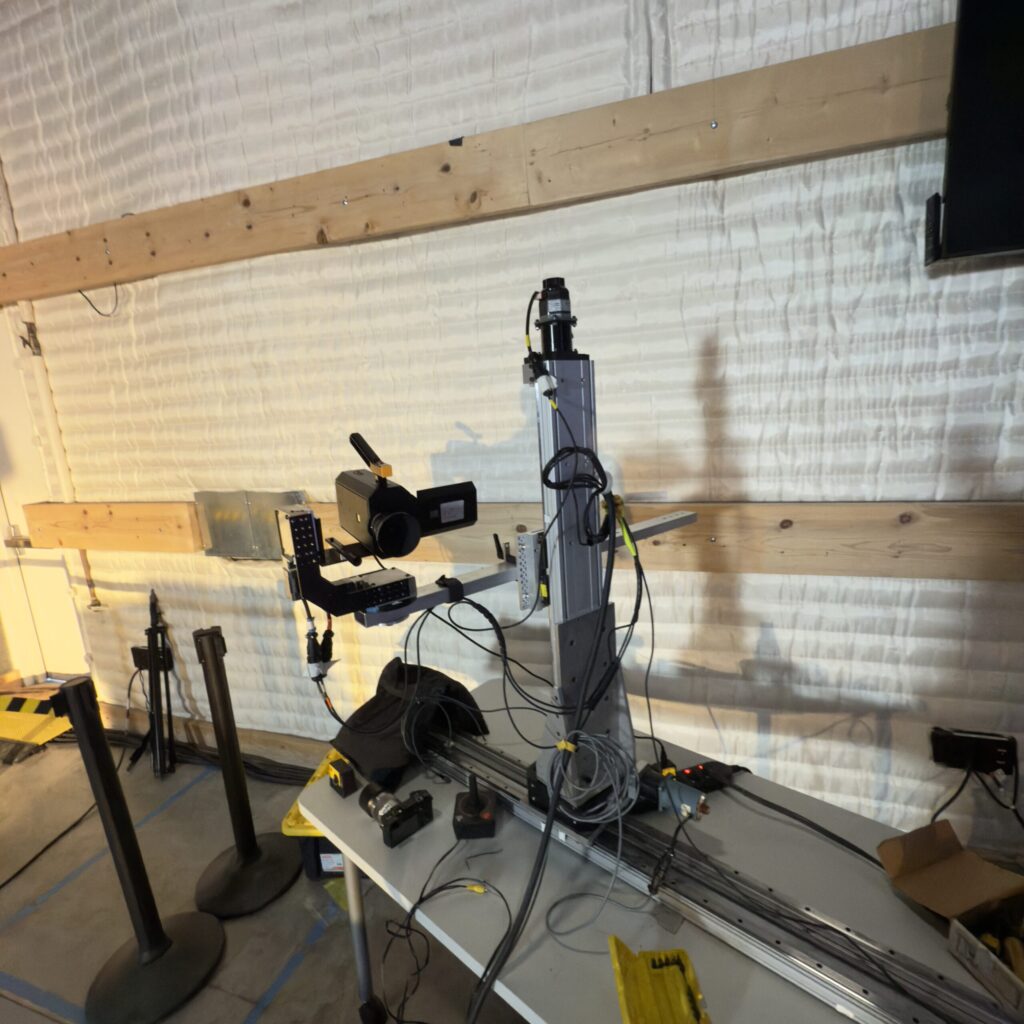
We had Sun workstations in the studio and terminals in our offices. This was my HDS200G terminal – https://books.google.com/books?id=YcB6jeWo2VcC&lpg=PA29&pg=PA29#v=onepage&q&f=false
The Veiled Virgin illustrates visual segmentation of shape by cause

The geometry of the physical object does not represent the visual experience.
Three-dimensional (3D) shape perception is one of the most important functions of vision. It is crucial for many tasks, from object recognition to tool use, and yet how the brain represents shape remains poorly understood. Most theories focus on purely geometrical computations (e.g., estimating depths, curvatures, symmetries). Here, however, we find that shape perception also involves sophisticated inferences that parse shapes into features with distinct causal origins. Inspired by marble sculptures such as Strazza’s The Veiled Virgin (1850), which vividly depict figures swathed in cloth, we created composite shapes by wrapping unfamiliar forms in textile, so that the observable surface relief was the result of complex interactions between the underlying object and overlying fabric. Making sense of such structures requires segmenting the shape based on their causes, to distinguish whether lumps and ridges are due to the shrouded object or to the ripples and folds of the overlying cloth. Three-dimensional scans of the objects with and without the textile provided ground-truth measures of the true physical surface reliefs, against which observers’ judgments could be compared. In a virtual painting task, participants indicated which surface ridges appeared to be caused by the hidden object and which were due to the drapery. In another experiment, participants indicated the perceived depth profile of both surface layers. Their responses reveal that they can robustly distinguish features belonging to the textile from those due to the underlying object. Together, these findings reveal the operation of visual shape-segmentation processes that parse shapes based on their causal origin.
Phillips, Flip, and Roland W. Fleming. “The Veiled Virgin Illustrates Visual Segmentation of Shape by Cause.” Proceedings of the National Academy of Sciences 117, no. 21 (2020): 11735–43.
Perceptual plausibility of exaggerated realistic motion

Squashing and stretching our way across the uncanny valley.
Abstract
The informal heuristic practices of the fine arts have much to offer to our understanding of the appearance of phenomenological reality. One interesting example is the use of exaggeration to enhance the illusion of liveliness in both living and nonliving subjects. This further eases the uncomfortable sense that the motion is somehow uncanny — especially with inanimate objects. We performed a series of experiments to test the effects of exaggeration on the phenomenological perception of simple animated objects — bouncing balls. A physically plausible model of a bouncing ball was augmented with a frequently used form of exaggeration known as squash and stretch. Observers were shown a series of animated balls, depicted using systematic parameterizations of the exaggeration model, and asked to rate their plausibility. A range of rendering styles provided varying levels of information as to the type of ball. In all cases, balls with small amounts of exaggeration were seen as plausible as those without any exaggeration (e.g., with veridical motion). Furthermore, when the type of ball was not specified, observers tolerated a large amount of exaggeration before judging them as implausible. When the type of ball was indicated, observers narrowed the range of acceptable exaggeration somewhat but still tolerated exaggeration well beyond that which would be physically possible. We contend that, in this case, exaggeration acts to bridge the so-called uncanny valley for artificial depictions of physical reality.
Schmidt, F., Noejovich, L., Chakalos, G., & Phillips, F. (2024). Perceptual plausibility of exaggerated realistic motion. Cognition, 251, 105880. https://doi.org/10.1016/j.cognition.2024.105880
Turdpaint

In my computer graphics youth, everyone wrote two programs – a 2D paint program and a 3D renderer.
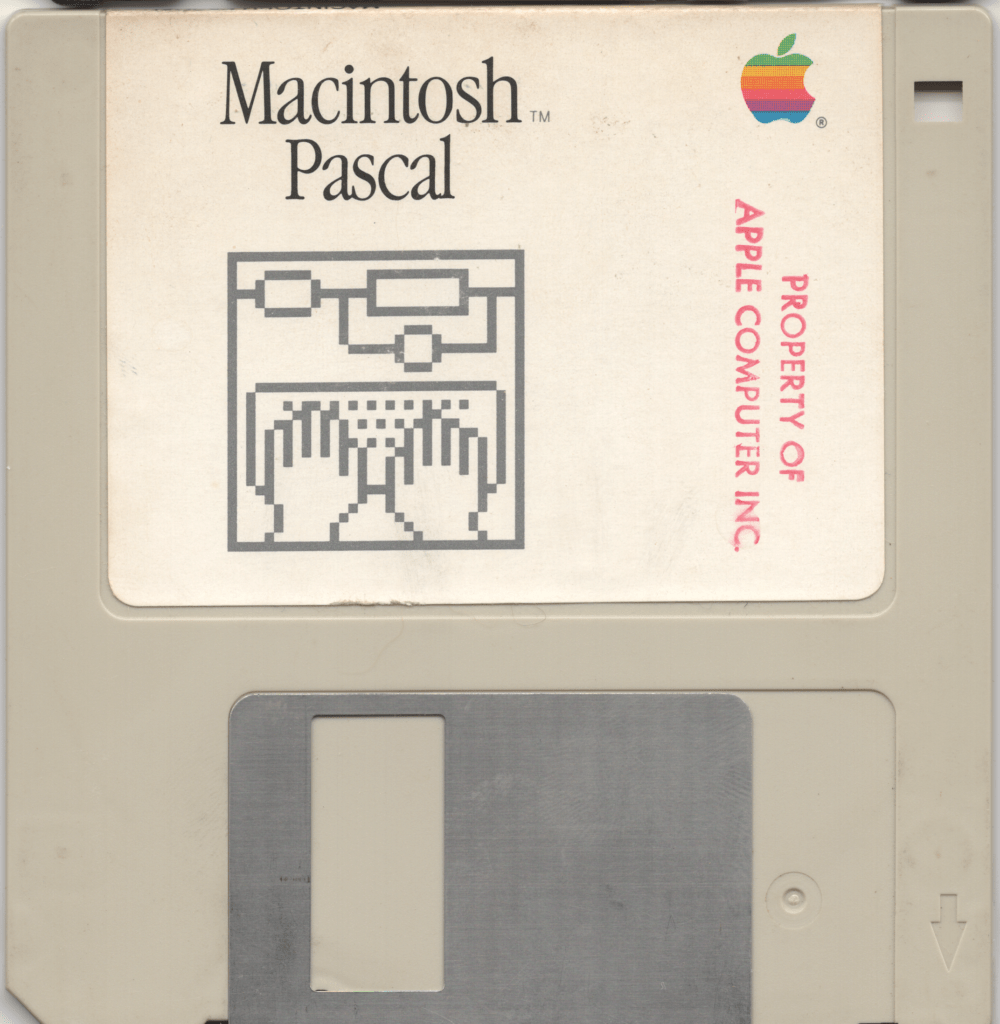
Such was the curriculum of the time. Ed Tripp taught CIS 781-2-3, a three quarter sequence that took you from the Bresenham line algorithm1 2 all the way to a scanline renderer. I wrote 99% of my code for that class on an original Macintosh 128K, in Megamax C and Macintosh Pascal.
For the in-person final exam for 783, Ed came in, wrote “Final: Write a ray tracer in JCL” on the board before we got to class. Having written a little bit of JCL in my life (we had a IBM 360 emulator that ran on the Amdahl, I learned assembly language on that) and I knew of its unreal power I was slightly panicked.
JCL or “Job Control Language” was the stuff you put before your actual code to tell the computer what to load, where to load it from, where to get input and output, what to do with the code you gave it, etc. The only thing I remember from back then was forward slashes, and that DD was the data deck, so you’d say something like –
//SYSIN DD BLEHto get it to load your data deck. It was a crazy but necessary part of getting things to run on mainframes.3
Luckily, it was a joke. But, you know, for a minute, it wasn’t.
When I finally got access to a color Macintosh (a Macintosh IIsi if I recall correctly, it was an engineering sample I got @ Pixar) I modified my paint program to work in color. The new version had a bug that caused it to paint in splats4, little blobs, and was christened “turdpaint” by my wife.

I gave a talk at some point on user interfaces for computer graphics (I think it was for the Human Factors Society at Ohio State) probably around 1992 or 1993. I found the above image in the slide deck from that talk. The paint brush cursor was the best thing about it, now in color, and the icon was my second favorite thing –

lest we forget that I went to a Bauhaus-Fascist5 architecture school.
Anyway – I found the slide deck, in which there are some really great images, but thought about turdpaint and its color revival, and it brought me great joy.
- I was on a SIGGRAPH bus, on my way to a social event at the ranch they used for the TV show Dallas.The gentleman next to me (who was wearing a very nice cowboy hat) introduced himself as Jack Bresenham. I said “Flip Phillips, I use your algorithm.” We had a great talk for the bus ride. ↩︎
- https://resources.wolframcloud.com/FunctionRepository/resources/BresenhamPoints/ ↩︎
- Fred Brooks, supervisor of the OS/360 project, for which JCL was created, called it “the worst computer programming language ever devised by anybody, anywhere”. (see Wikipedia) ↩︎
- A side note, I write a 3D particle renderer at Pixar that used what are now called Gaussian splats, back in 1989. I think Bill Reeves wrote one even earlier that inspired mine. ↩︎
- That characterization thanks to Tony Lupidi, a painter a great friend at CGRG who was as non-Bauhaus as I was Gropius. ↩︎